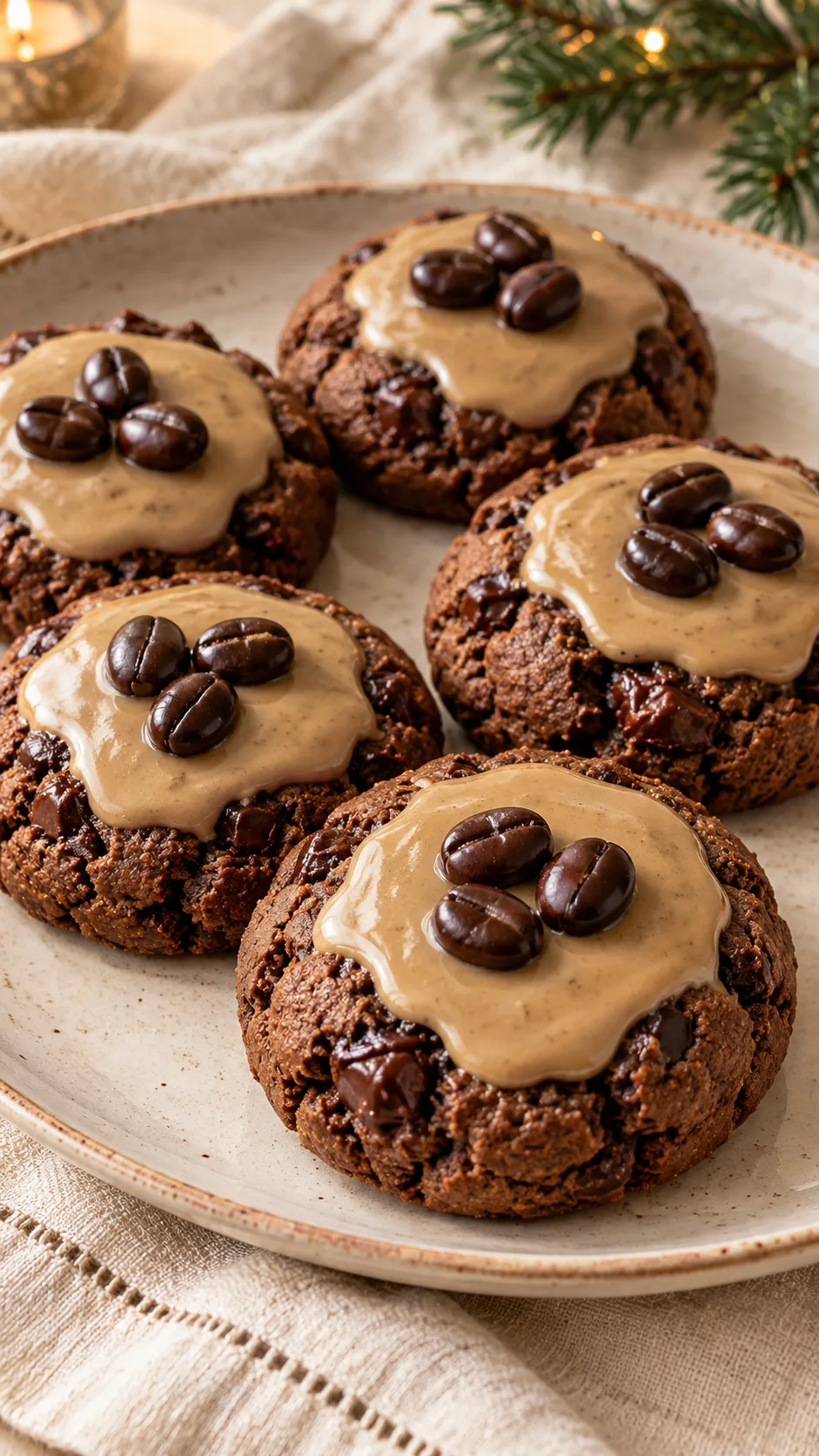
Espresso, chocolate chips and coffee liqueur flavor these glazed drop cookies, finished with three chocolate-covered coffee beans.
Measure the ingredients before starting, using the gram weights where possible. The method gives tray sizes, portion sizes and visual baking cues; the total time includes every batch and the final cooling or setting period.
As an Amazon Associate I earn from qualifying purchases.
Espresso Martini Cookies with Coffee Glaze Recipe
24 cookies. Use the portion sizes and tray layout in the method.
Times are sequential planning allowances. The cooking allowance includes every tray and any stovetop preparation; cooling is allowed after the final tray.
Kitchen tools you’ll need
- Digital kitchen scale and US measuring tools
- Mixing bowls, flexible spatula and measuring spoons
- Two 13 × 18-inch rimmed baking sheets, parchment and cooling rack
- Cookie scoop
Ingredients
Dough
Coffee glaze
Spoon flour into the cup and level it without packing; gram weights are the reference. Weigh eggs without their shells. Temperatures are for a fully preheated oven.
Instructions
Mix the dough
- Beat butter and both sugars for 2 minutes. Dissolve espresso powder in the egg, liqueur and vanilla, then beat into the butter mixture. Whisk flour, cocoa, baking soda and salt separately and fold in. Fold in chocolate chips.
Chill and portion
- Cover and chill for 60 minutes. Heat the oven to 350°F (175°C) conventional or 325°F (165°C) fan. Divide into 24 balls of about 32 g and arrange 12 on each of two lined 13 × 18-inch trays, 2 inches apart. Flatten slightly to thick discs.
Bake
- Bake one tray at a time for 10–12 minutes, 24 minutes total. Look for set edges and a soft center without wet dough. Leave 10 minutes on the tray, then cool on a rack for 20 minutes.
Glaze and decorate
- Whisk powdered sugar, 20 g liqueur and 10 g coffee into a thick glaze. Spread about 6 g on each cold cookie and top each with three chocolate-covered coffee beans. Allow 30 minutes to set before packing; the 60-minute cooling allowance includes this.
Chef’s Science & Pro Tips
Portion evenly
Weigh the portions so the centers finish together. Leave the stated space between cookies.
Cool trays
Use a cool baking sheet for each batch. A hot sheet starts melting the butter before the dough reaches the oven.
Set the crumb
Soft centers firm as they cool. Let the cookies rest on the tray before lifting them.
Storage and make-ahead
| Method | How long | What to do |
|---|---|---|
| Room temperature | Up to 3 days | Cool fully before sealing in an airtight container in a cool, dry room. Separate layers with parchment. |
| Refrigeration | Not needed for plain cookies | Refrigeration can change the texture. Keep unbaked dough covered in the refrigerator for up to 24 hours. |
| Raw freezing | Up to 1 month | Freeze uncoated, unfilled dough portions or tightly wrapped logs. Thaw in the refrigerator overnight, then shape and bake as directed; add coatings just before baking. |
| Baked freezing | Up to 1 month | Freeze completely cool cookies airtight with parchment between layers. Sugar coatings may need refreshing after thawing. |
| Restoring | Before serving | Thaw covered at room temperature to limit condensation. Refresh powdered sugar after thawing if needed. |
Notes
- Coffee liqueur remains in the uncooked glaze. These cookies also contain caffeine.
Frequently Asked Questions
Does the alcohol cook off?
The glaze contains uncooked coffee liqueur, so these cookies contain alcohol. For an alcohol-free version replace both liqueur quantities with the same weights of brewed coffee.
Can I reduce the caffeine?
Use decaffeinated espresso powder and coffee, an alcohol-free coffee substitution, and three chocolate chips instead of coffee beans. Chocolate can still contain some caffeine.
Why is the glaze runny?
Measure the liquids instead of pouring freely. Let the glaze stand a few minutes before spreading; it should slowly fall from a spoon.
Browse more cookie ideas in the Christmas Cookie Box Recipes collection.