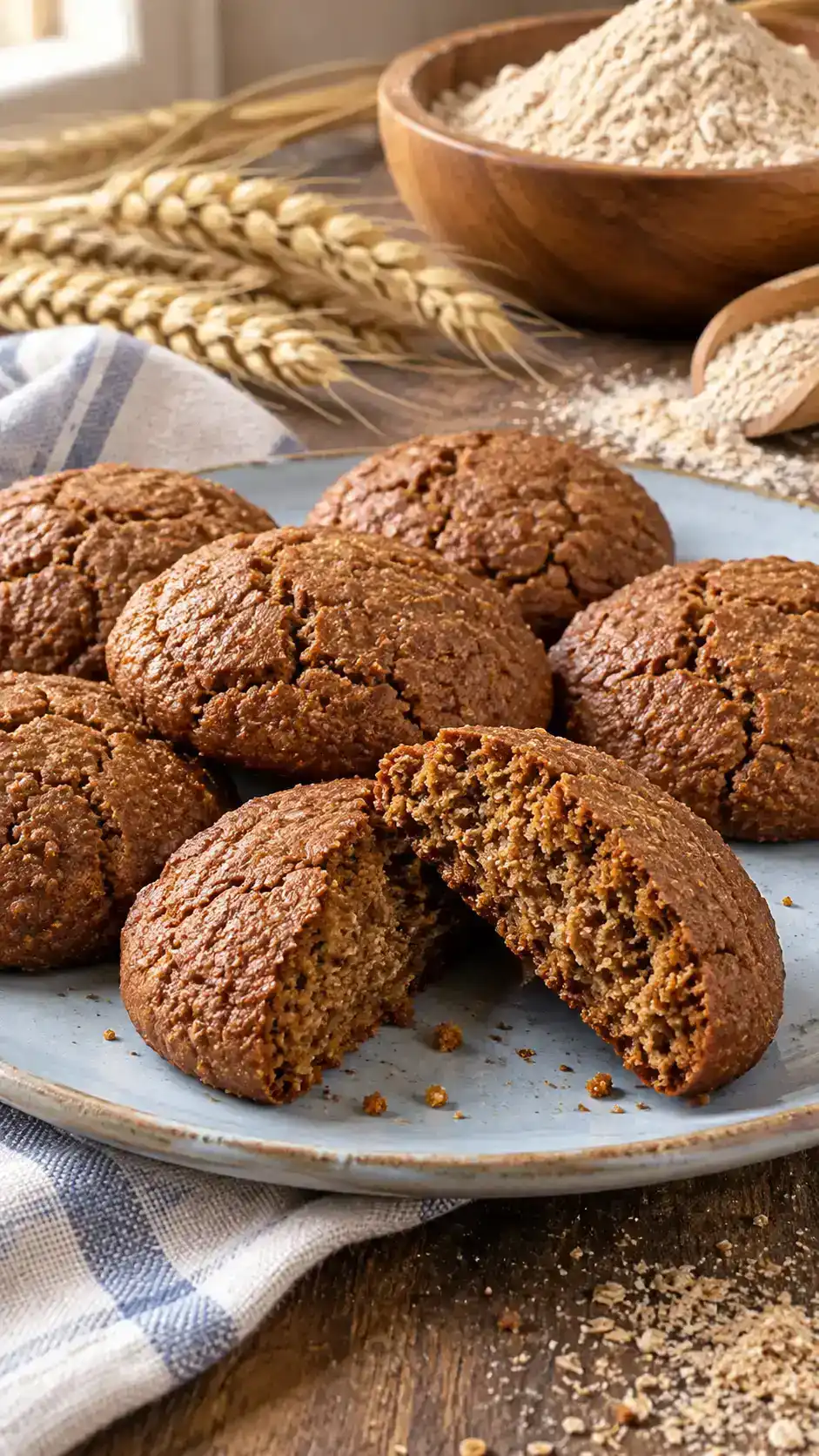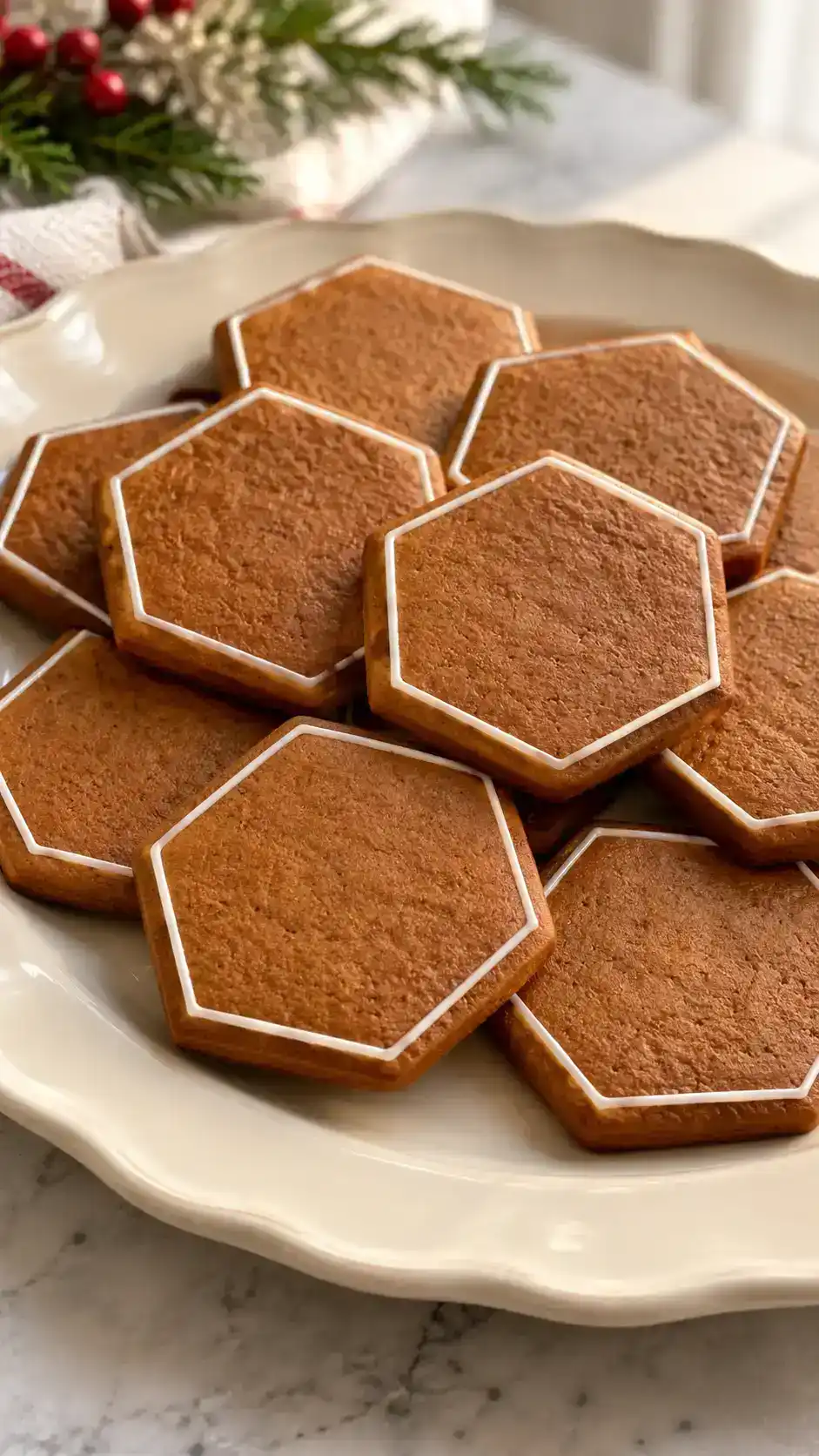
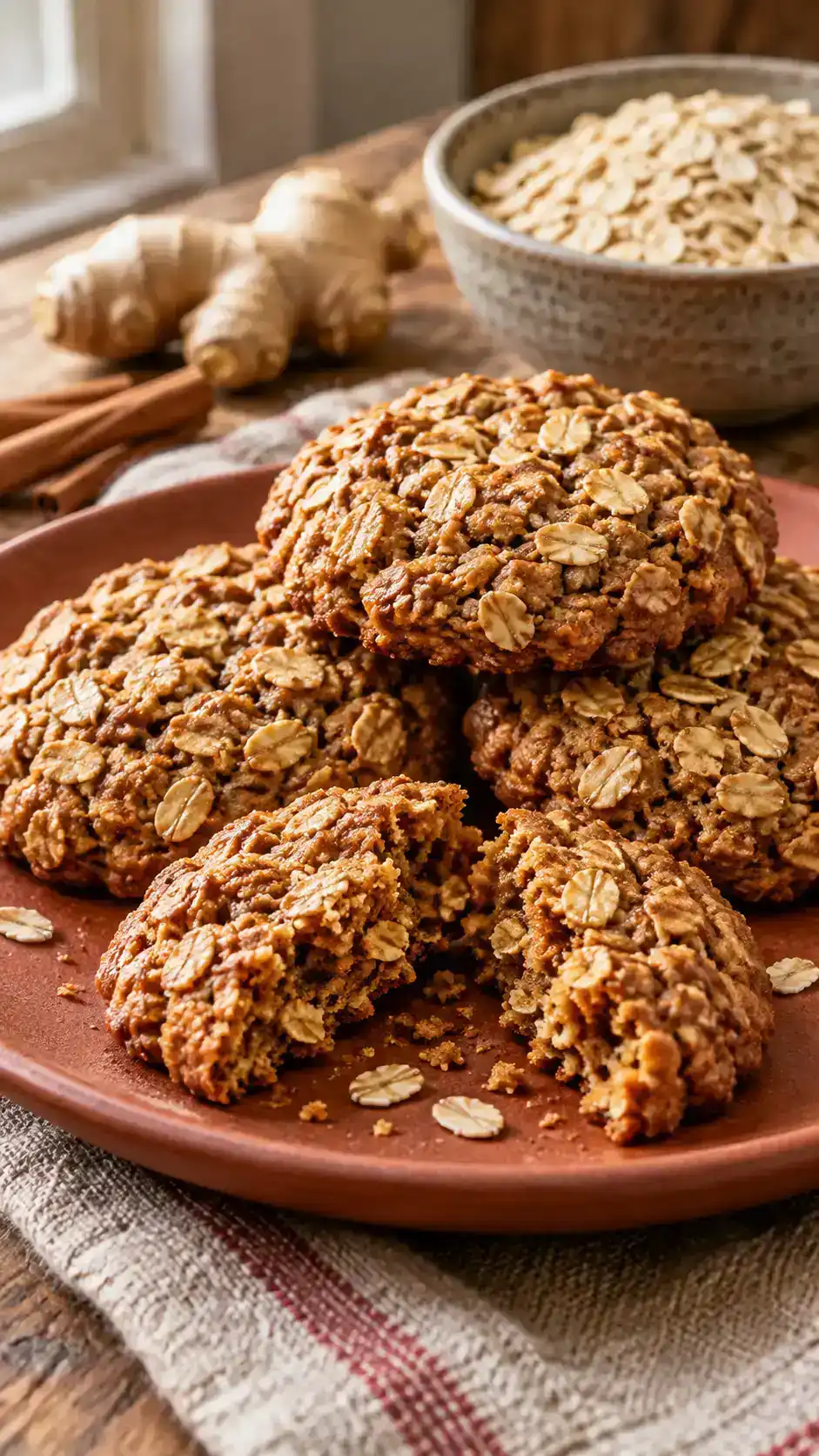
Rustic gingerbread oatmeal cookies with visible rolled oat flakes, chewy molasses centers and no chocolate chips.
This oat-focused version keeps the ginger and molasses prominent without chocolate pieces. Briefly break some of the rolled oats while leaving plenty of flakes visible. The chilled dough is portioned into rustic rounds and served plain after the centers have set.
As an Amazon Associate I earn from qualifying purchases.
Gingerbread Oatmeal Cookies Recipe
Per tray: 12–13 minutes · 3 trays of 10 cookies
Allow 129 minutes: 25 hands-on, 45 chilling, 39 for all baking trays, 20 cooling. Cooling includes the pan rest. Optional decoration, ingredient warm-up and extra trays add time.
Kitchen tools you’ll need
- Food processor for a brief oat pulse
- Electric mixer and bowls
- 1 1/2-tablespoon scoop
- Two 13 × 18-inch baking sheets and parchment
- Cooling rack
- US measures and scale
Ingredients
Cookie dough
Spice blend
Scale ingredients and US equivalents, including eggs. Keep cookie size, thickness, oven temperature and baking time per tray unchanged. More trays add time; weigh beaten egg for fractional batches.
Instructions
Prepare oats and dough
- Pulse rolled oats briefly 5–8 times to break some flakes while leaving visible texture. Whisk the oats with flour, baking soda, salt and spices. Cream butter with both sugars, then add egg and molasses. Mix in the oat blend just until combined.
Hydrate the oats
- Cover and chill 45 minutes until scoopable. A longer overnight chill requires extra time to soften enough for portioning.
Portion the cookies
- Heat to 350°F (175°C) conventional or 325°F (165°C) fan. Divide dough into 30 portions about 31 g each, roughly 1 1/2 tablespoons, and space 3 inches apart on lined pans. Keep waiting dough cold.
Keep the centers tender
- Bake at 350°F (175°C) conventional or 325°F (165°C) fan for 12–13 minutes until edges are lightly brown and centers still soft. Use cooled pans between trays.
Set the oat-rich dough
- Rest 5 minutes on the pan, then 15 minutes on a rack. Serve without icing.
Chef’s Science & Pro Tips
Pulse only briefly
A mix of broken oats and flakes gives structure without losing visible texture.
Keep the chill
Hydrated oats and firm butter make the dough easier to portion.
Leave centers soft
Set edges and a dry-looking top indicate doneness; oats firm further as the cookies cool.
Storage and make-ahead
| Method | How long | What to do |
|---|---|---|
| Room temperature | 3–4 days | Cool completely, then store airtight in a cool room. |
| Refrigeration | Raw dough: up to 2 days | Wrap dough tightly. Plain baked cookies do not need refrigeration. |
| Raw freezing | Up to 2 months | Freeze portions airtight; thaw covered in the refrigerator before baking. |
| Baked freezing | Up to 2 months | Freeze cooled cookies airtight. Thaw covered at room temperature. |
| Restoring | Before serving | Warm undecorated cookies briefly at 300°F for 3–5 minutes if desired; cool before decorating. |
Notes
- Visible rolled oats provide the rustic texture. There are no chocolate chips or icing in this batch. Pulse briefly rather than turning all the oats into flour; a mix of small pieces and flakes binds the cookie while preserving chew.
Nutrition
Estimated nutrition per serving; brands and portion sizes vary.
Frequently Asked Questions
Can I replace oats with oat flour?
No direct swap is provided. These cookies need visible rolled oat flakes and briefly broken pieces.
Are there chocolate chips?
No. This version highlights the oats and molasses spice without chocolate or icing.
Are they gluten-free?
The dough contains wheat flour. Certified gluten-free oats alone do not make the recipe gluten-free.
Browse more cookie ideas in the Gingerbread Cookies Ideas collection.