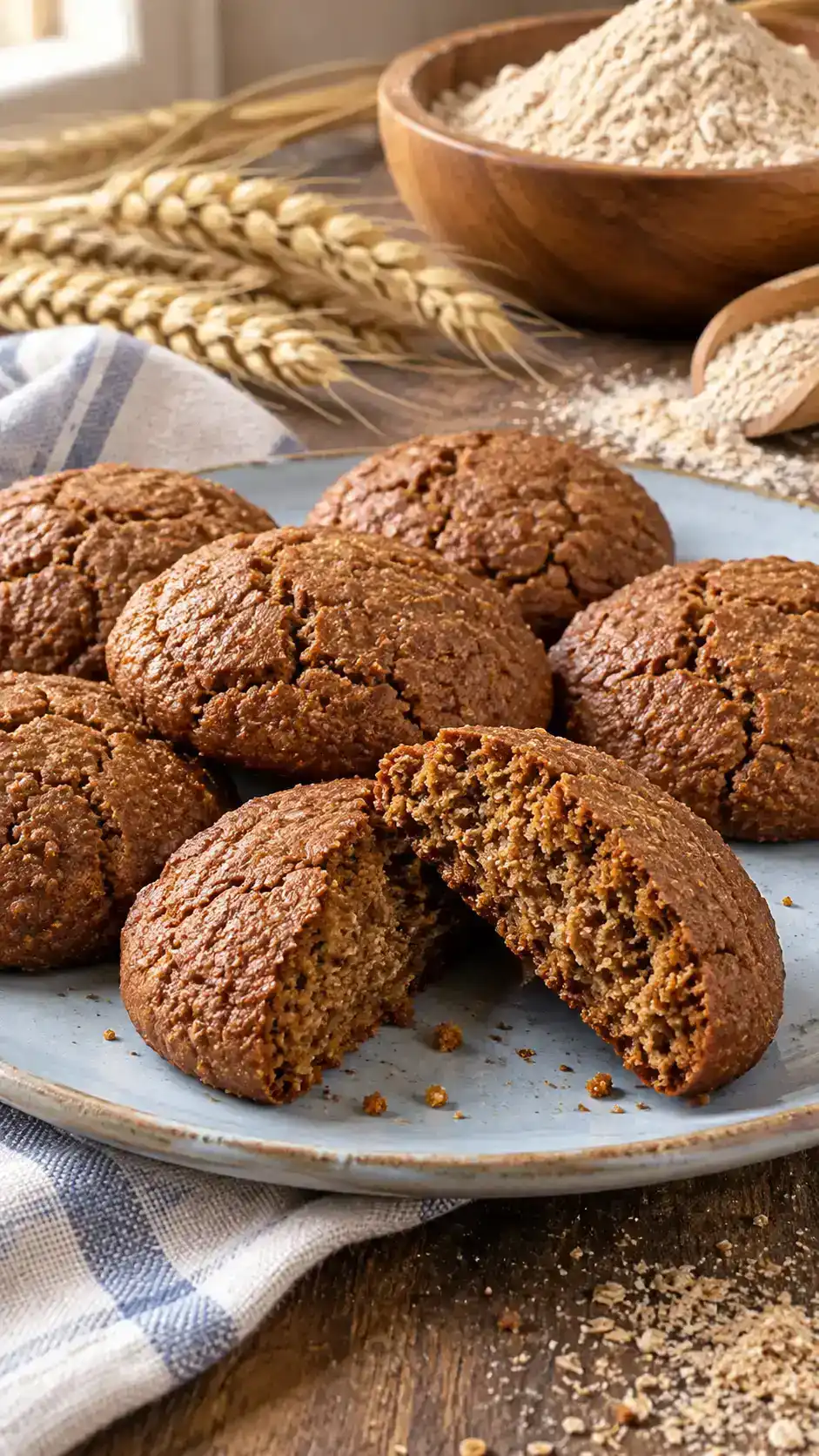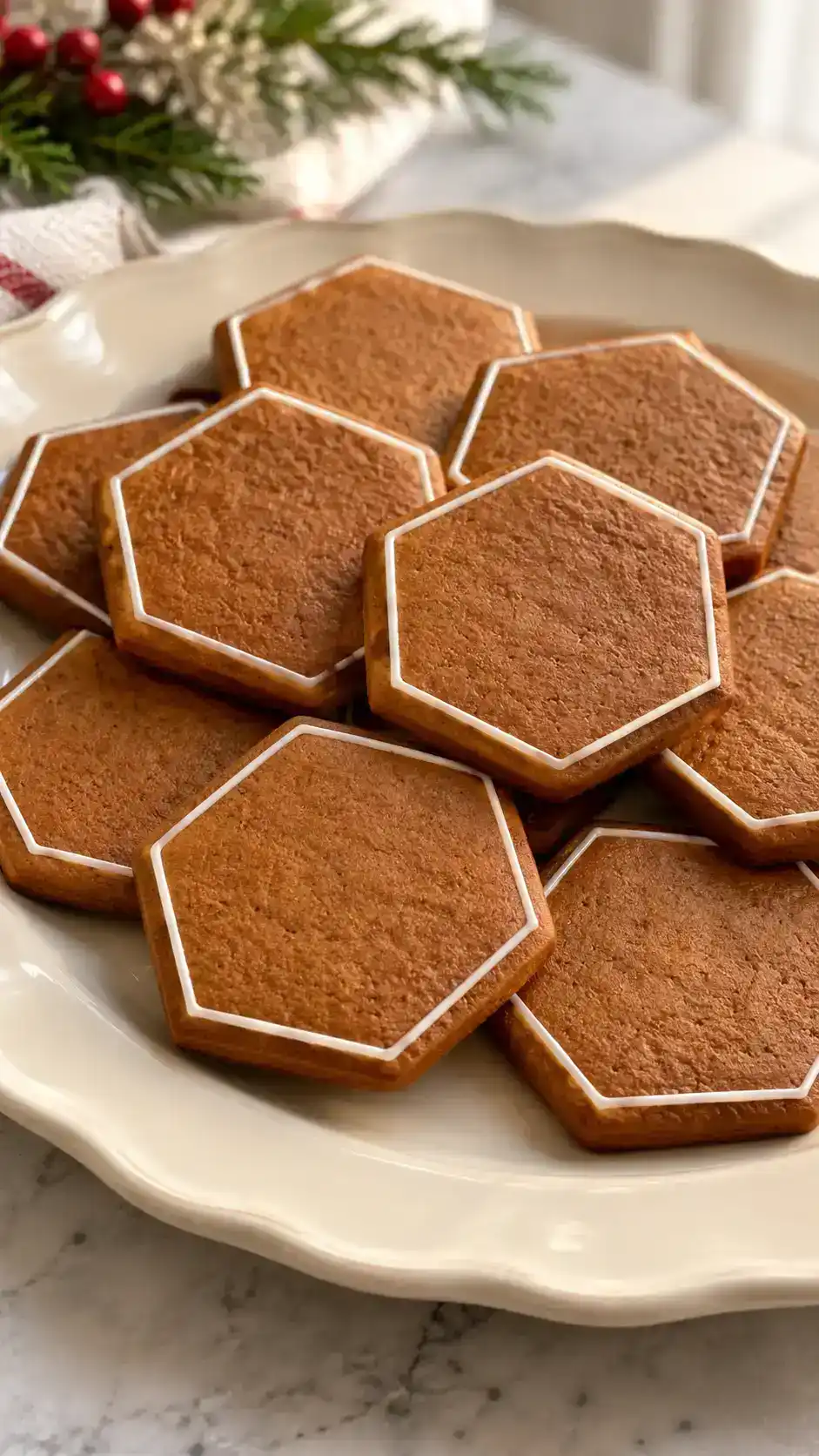
Almond flour gingerbread cut-outs with maple syrup, molasses and tapioca starch, made without wheat flour, egg or dairy.
The almond flour, tapioca starch and maple syrup make a soft dough that benefits from a short rest before rolling.
Roll the dough between parchment for support, then freeze the sheet for five minutes if the cut shapes resist lifting.
As an Amazon Associate I earn from qualifying purchases.

Almond Flour Gingerbread Cookies Recipe
Per tray: 8–11 minutes · 2 trays of 9 cookies on 13 × 18-inch pans
Allow 77 minutes: 25 hands-on, 10 minutes resting at room temperature, 22 for all baking trays and 20 cooling. No refrigerator chill is needed. Cooling includes the pan rest. Optional decoration, ingredient warm-up and extra trays add time.
Kitchen tools you’ll need
- Mixing bowl and spatula
- US measures and digital scale
- Rolling pin and two parchment sheets; freeze rolled dough between the sheets for 5 minutes before cutting if it sticks.
- 2 1/2-inch simple cutters
- Two 13 × 18-inch baking sheets
- Thin spatula and cooling rack
Ingredients
Cookie dough
Spice blend
Scaling adjusts the listed ingredients and US equivalents. Keep cookie size, thickness, oven temperature and baking time per tray unchanged; more trays add time.
Instructions
Combine the nut-flour dough
- Whisk almond flour, tapioca flour, soda, ginger and cinnamon. Stir in cooled melted coconut oil, maple syrup and molasses until a cohesive slightly sticky dough forms.
Rest at room temperature
- Rest at room temperature 10 minutes to let the flours absorb liquid. No scheduled refrigerator chill is needed.
Roll between parchment
- Heat to 350°F (175°C) conventional or 325°F (165°C) fan. Roll between parchment to an even 1/4 inch. Cut simple 2 1/2-inch shapes, lift carefully and place 1 inch apart on lined pans. Gather scraps gently.
Set the fragile cookies
- Bake 8–9 minutes for tender centers or 10–11 for firmer edges. Look for light golden edges. Almond flour browns readily; check the first tray early.
Leave on the pan longer
- Cool 10 minutes on the pan before moving gently, then another 10 minutes on a rack. The warm cookies are fragile and become stronger when cold. Optional egg-free cookie icing is additional.
Chef’s Science & Pro Tips
Use fine blanched flour
Coarse almond meal has a different texture and makes delicate shapes harder to lift.
Keep the tapioca
Starch helps bind a dough without wheat gluten or egg; omitting it changes structure.
Cool before lifting
Ten minutes on the pan allows fragile nut-flour cookies to firm.
Storage and make-ahead
| Method | How long | What to do |
|---|---|---|
| Room temperature | Up to 3 days | Cool completely, then store airtight in a cool room. |
| Refrigeration | Raw dough: up to 2 days | Wrap dough tightly. Plain baked cookies do not need refrigeration. |
| Raw freezing | Up to 2 months | Freeze a tightly wrapped dough disk. Thaw covered in the refrigerator, then let become pliable enough to roll. |
| Baked freezing | Up to 2 months | Freeze cooled cookies airtight. Thaw covered at room temperature. |
| Restoring | Before serving | Warm undecorated cookies briefly at 300°F for 3–5 minutes if desired; cool before decorating. |
Notes
- Fine blanched almond flour and tapioca starch work together here. This is not a one-for-one almond-flour substitution in a wheat recipe. It contains tree nuts, while the dough has no egg or dairy; verify labels for any decorations. US flour volumes vary with grind, so gram weights improve repeatability.
Nutrition
Estimated nutrition per serving; brands and portion sizes vary.
Frequently Asked Questions
Can I replace tapioca with more almond flour?
Not directly. Tapioca provides starch binding that almond flour does not.
Is this nut-free?
No. Almond flour is the main ingredient, so the cookies contain tree nuts.
Why are warm cookies falling apart?
They need the full 10-minute pan rest and further cooling before handling.
Browse more cookie ideas in the Gingerbread Cookies Ideas collection.