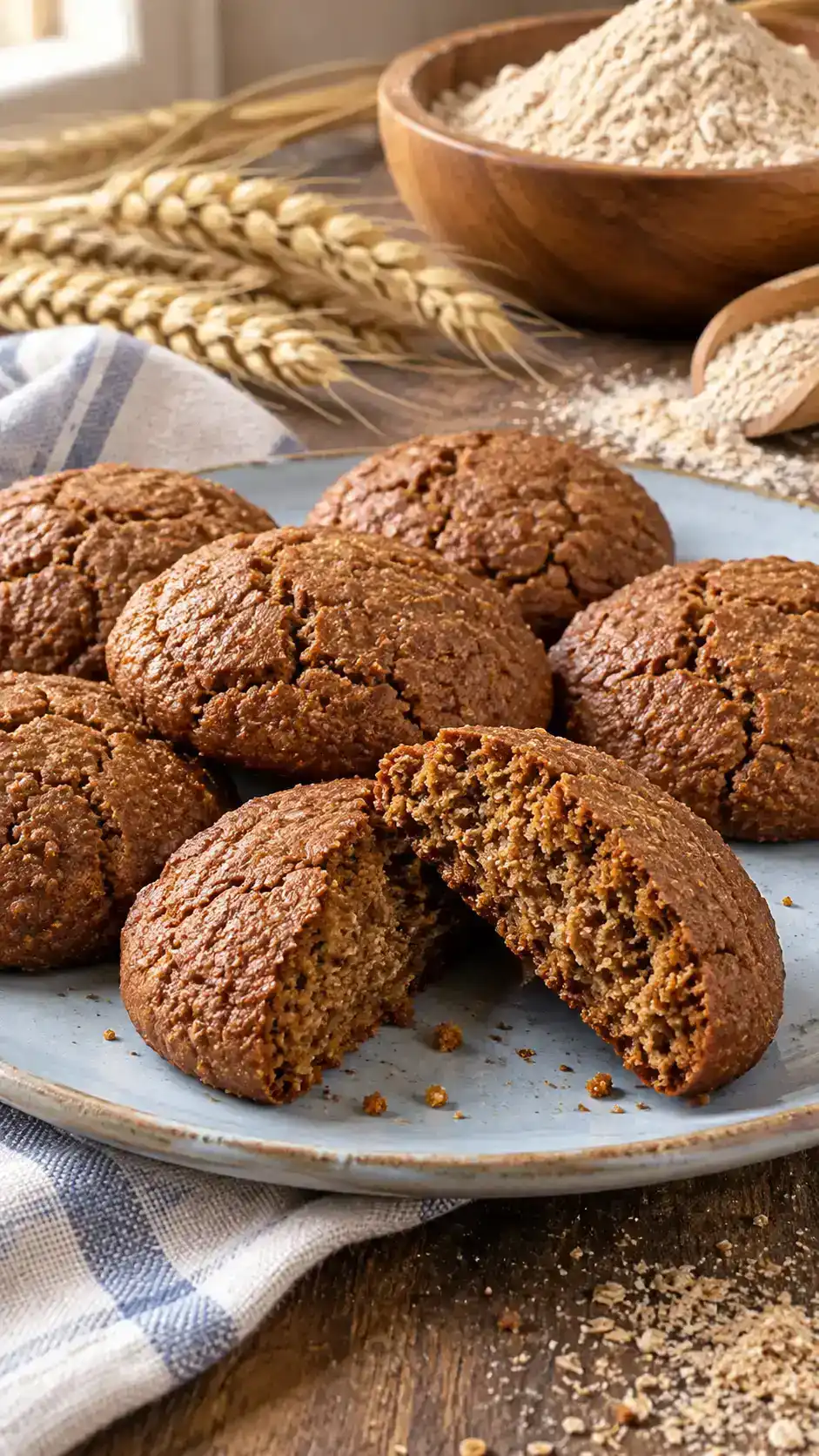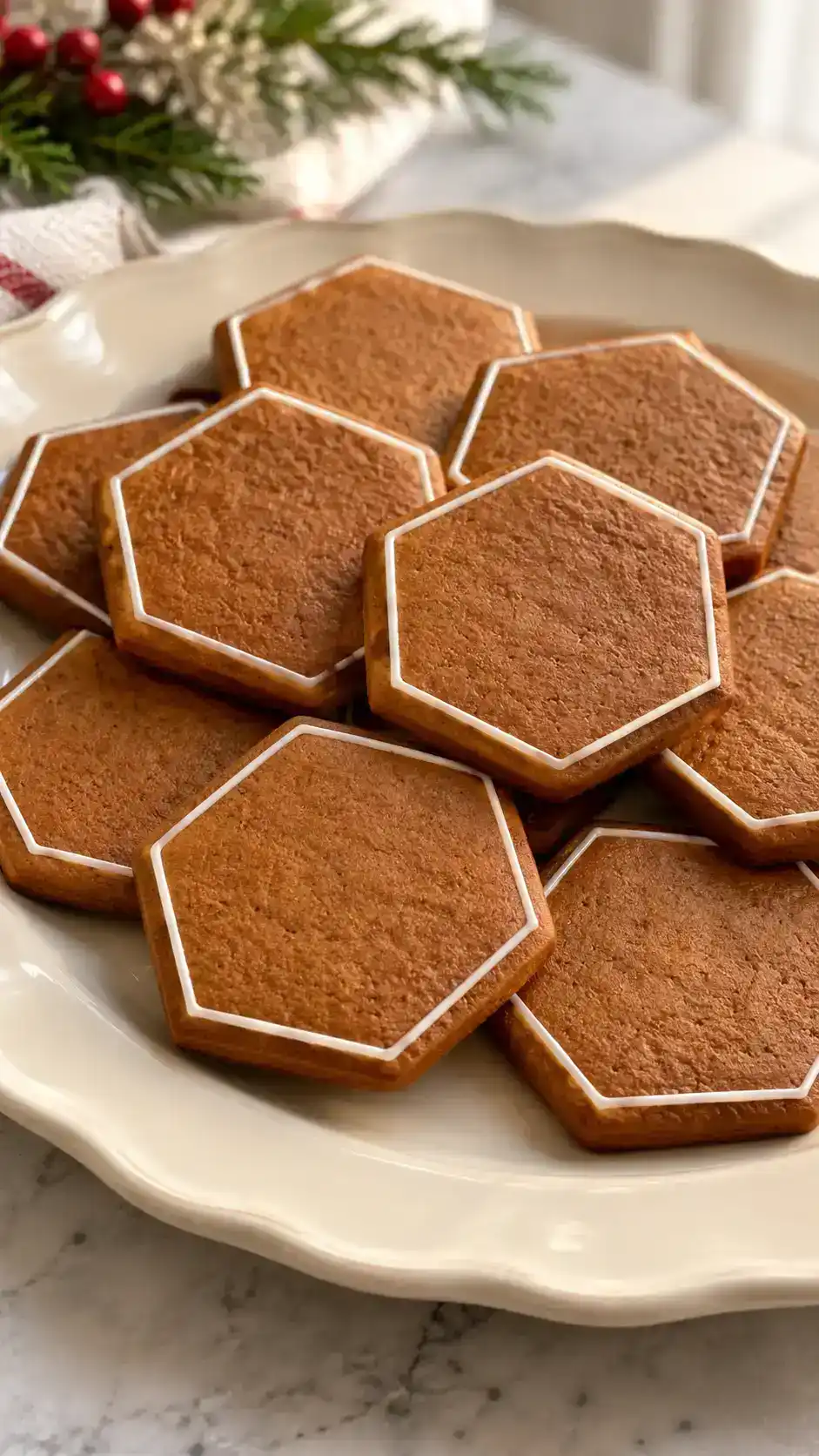
Soft gingerbread cookies made with neutral canola oil instead of butter, with a molasses center and coarse sugar crust.
Neutral oil makes this a mixing-and-scooping dough with no butter creaming step. Measure the oil and flour carefully instead of adding flour to make the dough feel like a butter version. Allow the longer pan rest before lifting the soft rounds.
As an Amazon Associate I earn from qualifying purchases.

Gingerbread Cookies with Oil Instead of Butter Recipe
Per tray: About 14 minutes · 3 trays of 10 cookies on 13 × 18-inch pans
Allow 82 minutes: 20 hands-on, 0 chilling, 42 for all baking trays, 20 cooling. Cooling includes the pan rest. Optional decoration, ingredient warm-up and extra trays add time.
Kitchen tools you’ll need
- Electric mixer and bowls
- Rounded tablespoon scoop
- Sugar coating bowl
- Two 13 × 18-inch pans and parchment
- Cooling rack
- US measures and digital scale
Ingredients
Cookie dough
Coating
Scale ingredients and US equivalents, including eggs. Keep cookie size, thickness, oven temperature and baking time per tray unchanged. More trays add time; weigh beaten egg for fractional batches.
Instructions
Blend the oil dough
- Heat to 325°F (165°C) conventional or 300°F (150°C) fan. Whisk flour, spices, soda and salt. Beat brown sugar, canola oil, molasses and egg until evenly blended. Add dry ingredients gradually on low speed, scraping the bottom to incorporate all flour.
Use without chilling
- No scheduled chilling is needed. The dough should be soft but portionable. Use the measured flour rather than adding extra to make it feel like a butter dough.
Coat the tops
- Divide into 30 balls of about 29 g, roughly a rounded tablespoon. Dip the upper half in coarse sugar and arrange 2 inches apart on lined pans.
Set the soft cookie
- Bake about 14 minutes until edges set and surfaces no longer look wet. Oil-based centers stay soft; do not wait for a firm hot middle. Use cool pans for later trays.
Let the structure hold
- Rest 10 minutes on the pan, then about 10 minutes on a rack. Store only when completely cooled.
Chef’s Science & Pro Tips
Measure oil precisely
Too much oil makes the dough greasy and increases spread.
Avoid extra flour
Oil dough feels different from butter dough; stick with the measured formula.
Give a longer pan rest
Soft centers need time to hold together before being lifted.
Storage and make-ahead
| Method | How long | What to do |
|---|---|---|
| Room temperature | 3–4 days | Cool completely, then store airtight in a cool room. |
| Refrigeration | Raw dough: up to 2 days | Wrap dough tightly. Plain baked cookies do not need refrigeration. |
| Raw freezing | Up to 2 months | Freeze portions airtight; thaw covered in the refrigerator before baking. |
| Baked freezing | Up to 2 months | Freeze cooled cookies airtight. Thaw covered at room temperature. |
| Restoring | Before serving | Warm undecorated cookies briefly at 300°F for 3–5 minutes if desired; cool before decorating. |
Notes
- This formula is designed for canola oil, not a direct equal-volume butter substitution in another recipe. The 14 tablespoons equal 3/4 cup plus 2 tablespoons. Neutral oil keeps the cookies soft and requires no butter creaming or scheduled chill. Contains egg and wheat; check optional toppings for dairy. Nutrition includes all coating sugar supplied.
Nutrition
Estimated nutrition per serving; brands and portion sizes vary.
Frequently Asked Questions
Is the oil amount 3/4 cup?
It is 3/4 cup plus 2 tablespoons, or 14 tablespoons total.
Can I swap butter into this recipe?
No direct butter substitution is provided; use a dedicated butter-based gingerbread recipe.
Do I need to chill it?
No scheduled chilling is required for this oil-based drop-cookie formula.
Browse more cookie ideas in the Gingerbread Cookies Ideas collection.