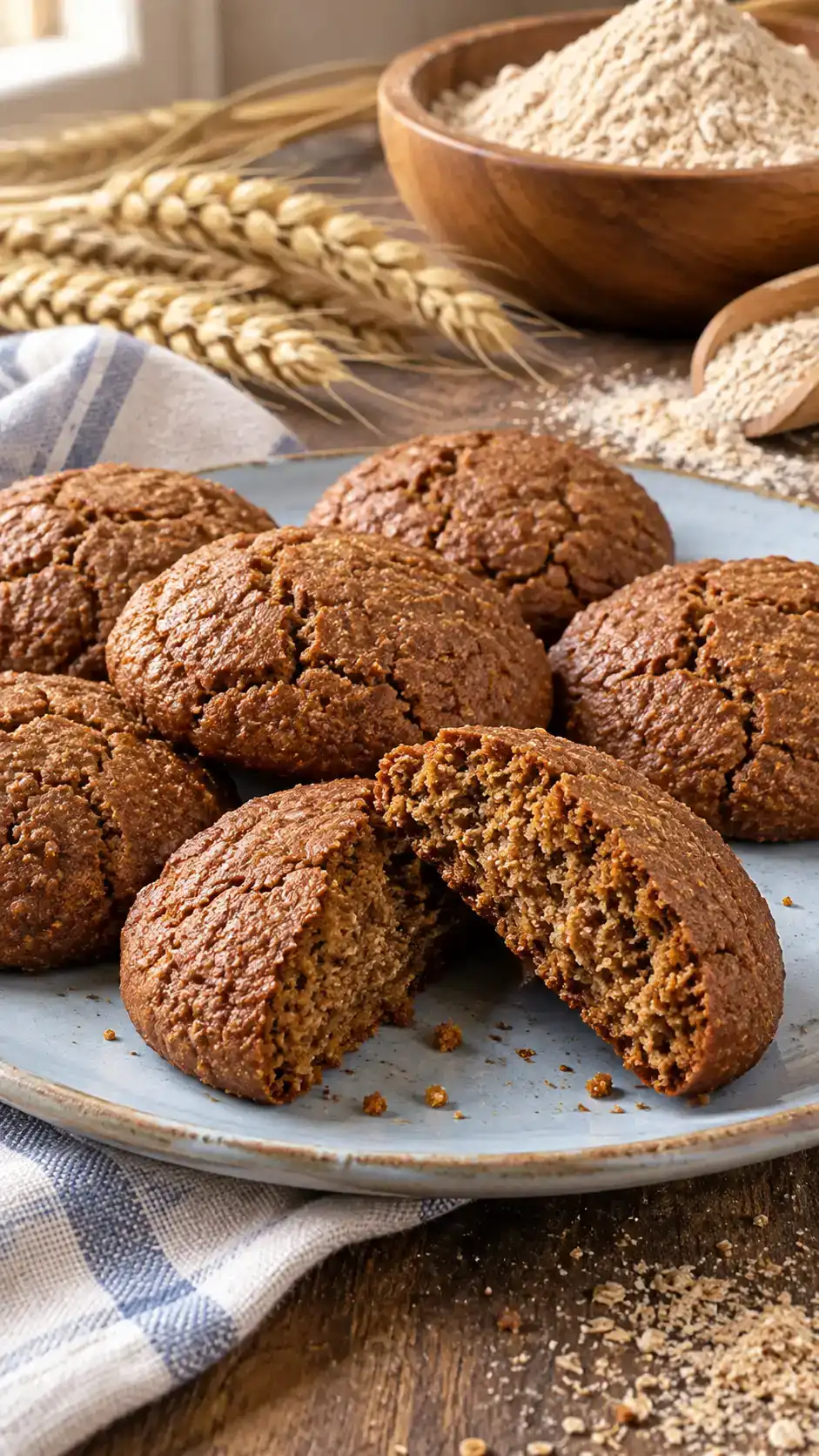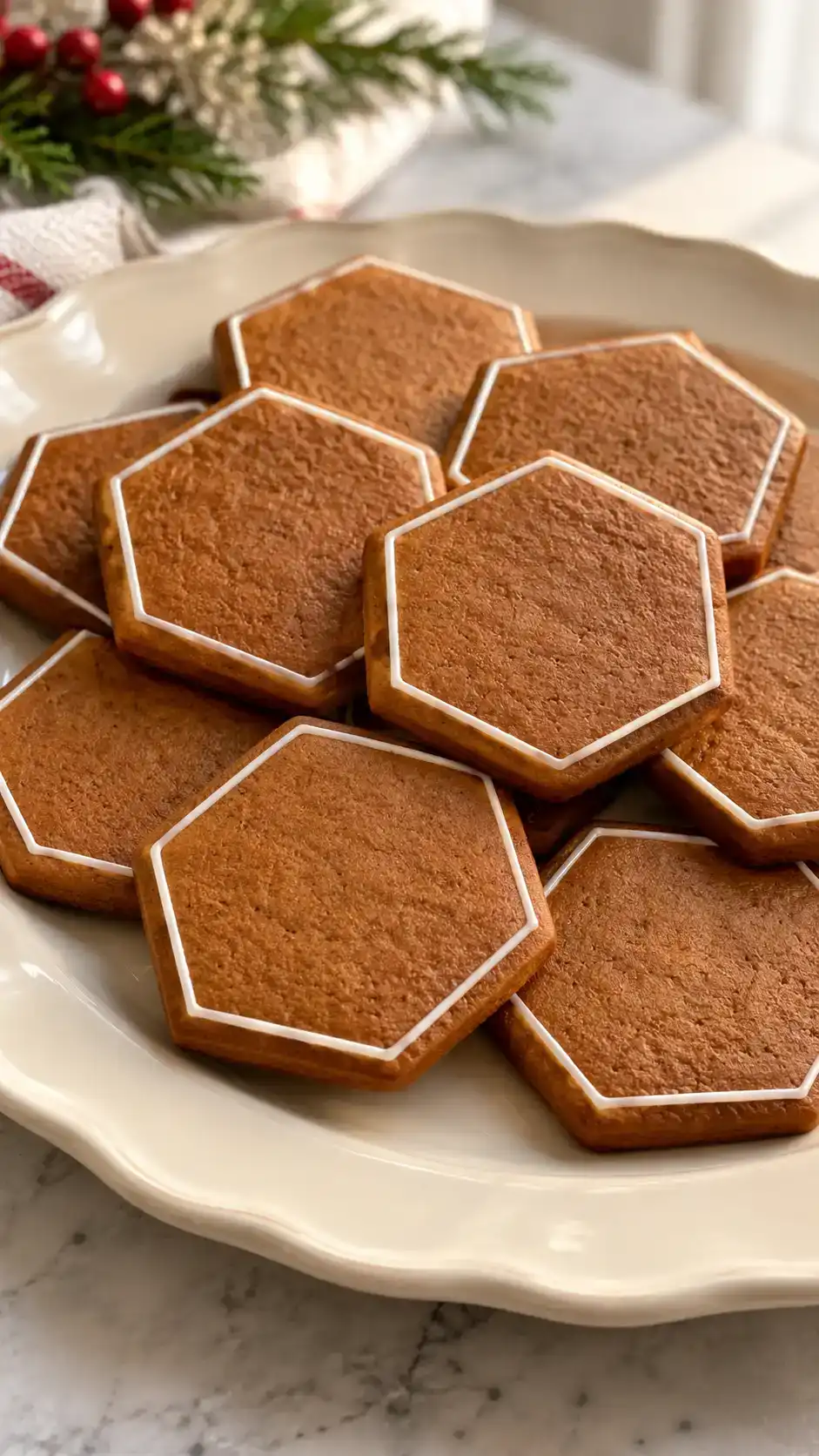
Brown sugar and molasses drop cookies with crackled tops and a satisfyingly chewy middle.
Scoop this dough instead of rolling it: the rounds spread into crackled cookies, with a little sparkle from an optional sugar coating. A full hour of chilling makes the sticky dough easier to handle.
Take them out when the edges are set and the middle is still soft. Five minutes on the baking sheet lets each cookie firm enough to move without sacrificing the chewy bite.
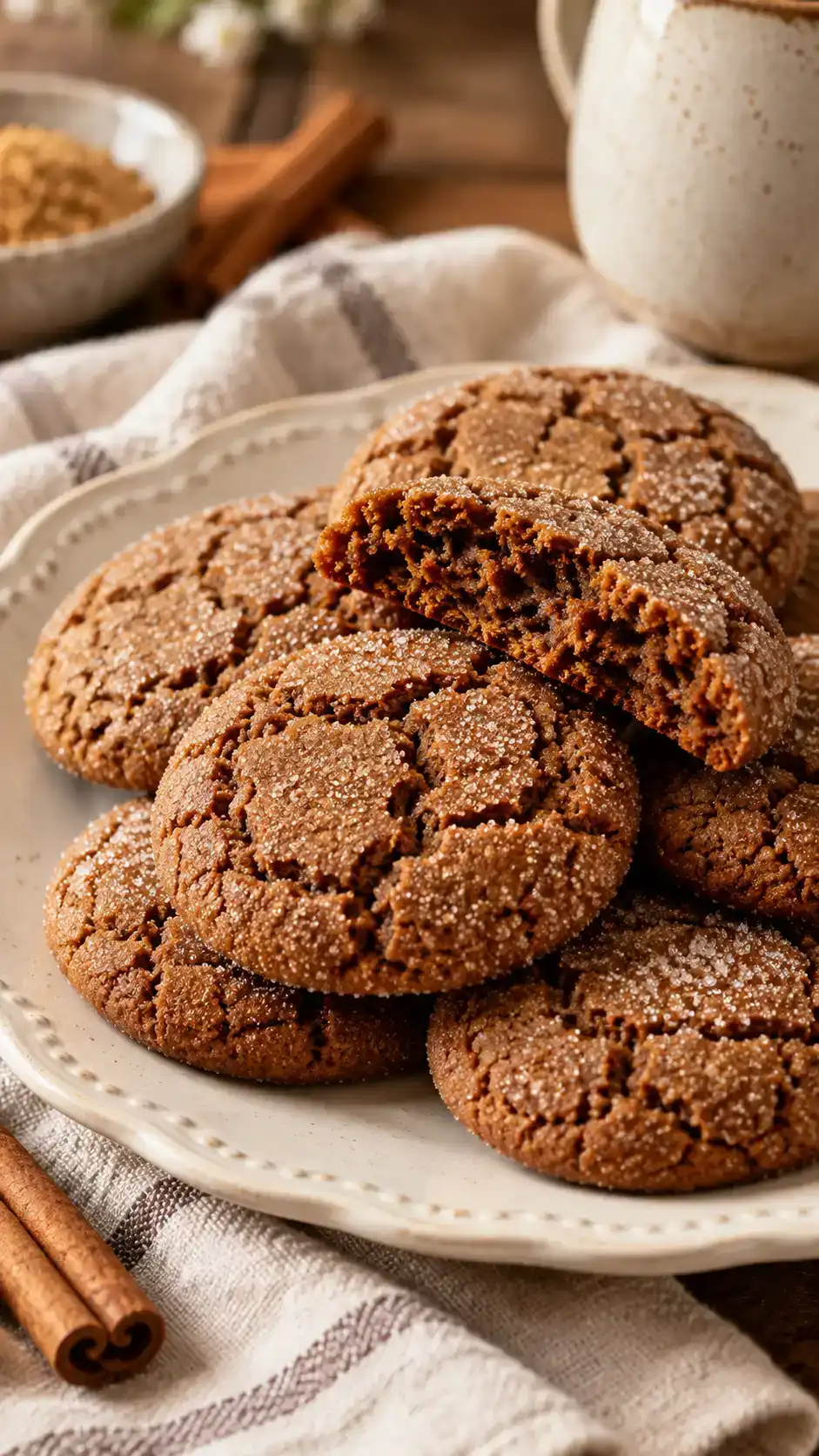
Chewy Gingerbread Cookies
Per tray: 11–12 minutes · About 3 trays; bake one tray at a time
Allow 140 minutes: 25 minutes hands-on, 60 minutes chilling, about 35 minutes for three trays and 20 minutes cooling the last tray. Cooling includes the 5-minute pan rest. Butter warm-up, extra chilling and optional decorating add time.
Kitchen tools you’ll need
- Digital kitchen scale and US measuring cups/spoons
- Large mixing bowl and electric mixer
- 1-tablespoon cookie scoop
- Two 13 × 18-inch light-colored baking sheets and parchment paper
- Wide spatula and wire cooling rack
Brown sugar and molasses drop cookies with crackled tops and a satisfyingly chewy middle.
Ingredients
Scaling adjusts ingredient weights and US equivalents. Keep cookie size, thickness, oven temperature and time per tray unchanged; extra trays increase total time. For half a batch, beat the egg and weigh half.
Cookie dough
Spice blend
Optional coating
Instructions
Mix
- Cream and combineBeat butter and both sugars for 2 minutes. Mix in molasses, then egg and vanilla; scrape the bowl. Whisk flour, soda, salt and spices separately, then mix into the wet ingredients just until combined.
Chill
- Firm the doughCover and refrigerate for at least 1 hour. If chilled longer than 2 hours, let stand about 20–30 minutes until scoopable; keep it cool rather than greasy.
Shape
- Portion evenlyHeat oven to 350°F (177°C) conventional; for fan, use about 320°F (160°C) and check early. Line pans. Make about 32 portions of 26 g, roughly a rounded tablespoon. Roll in optional sugar and arrange about 3 inches apart, up to 12 per large tray.
Bake
- Check the centersBake on the center rack for 11–12 minutes. The edges should be set and tops cracked, with soft centers that are no longer glossy-wet. Use a cool pan for each new batch.
Cool
- Let the structure setRest 5 minutes on the pan, then lift onto a wire rack. Cool another 15 minutes before sealing airtight. Cookies firm as they cool; do not bake until hard.
Chef’s Science & Pro Tips
Why they stay chewy
Molasses and brown sugar retain moisture. The relatively modest flour amount gives a flexible center; extra flour can make it dry.
Control spread
Chill the mixed dough for the full hour and cool baking sheets between batches. A greasy dough needs chilling, not more flour.
Best bite
Judge texture after cooling. Store airtight once cool; leaving cookies exposed dries the edges and center.
Storage & Make-Ahead
| Method | How long | What to do |
|---|---|---|
| Room temperature | Up to 5 days | Cool completely and seal airtight in a cool, dry place. Keep soft cookies separate from crisp cookies. Let any icing dry before layering. |
| Refrigeration | Raw dough: up to 48 hours | Wrap tightly. Let dough soften just enough to scoop. Plain baked cookies do not need refrigeration; follow storage instructions for any added icing. |
| Freeze raw dough | Up to 2 months at 0°F (−18°C) | Freeze uncoated portions airtight. Thaw overnight in the refrigerator, then follow the shaping and baking instructions. |
| Freeze baked cookies | Up to 2 months at 0°F (−18°C) | Freeze fully cooled, preferably undecorated cookies in an airtight container, separating layers with parchment. Thaw covered at room temperature. |
| Refresh | Just before serving | For a softer bite, microwave one plain cookie for 5 seconds and check; serve promptly. Do not heat decorated cookies. This will not reverse severe drying or overbaking. |
Notes
- Use regular unsulphured molasses, not blackstrap. Flour cup weights vary; spoon and level without packing, or use the stated grams. Spice weights are approximate; spoon measures are more practical for small amounts. Contains wheat, milk and egg. Optional icing and coating are additional.
Nutrition
Approximate nutrition per cookie, calculated from generic ingredient values for 32 equal-size cookies. Excludes optional sugar coating and icing; spices and vanilla contribute small additional amounts. Brands and actual yield change these estimates.
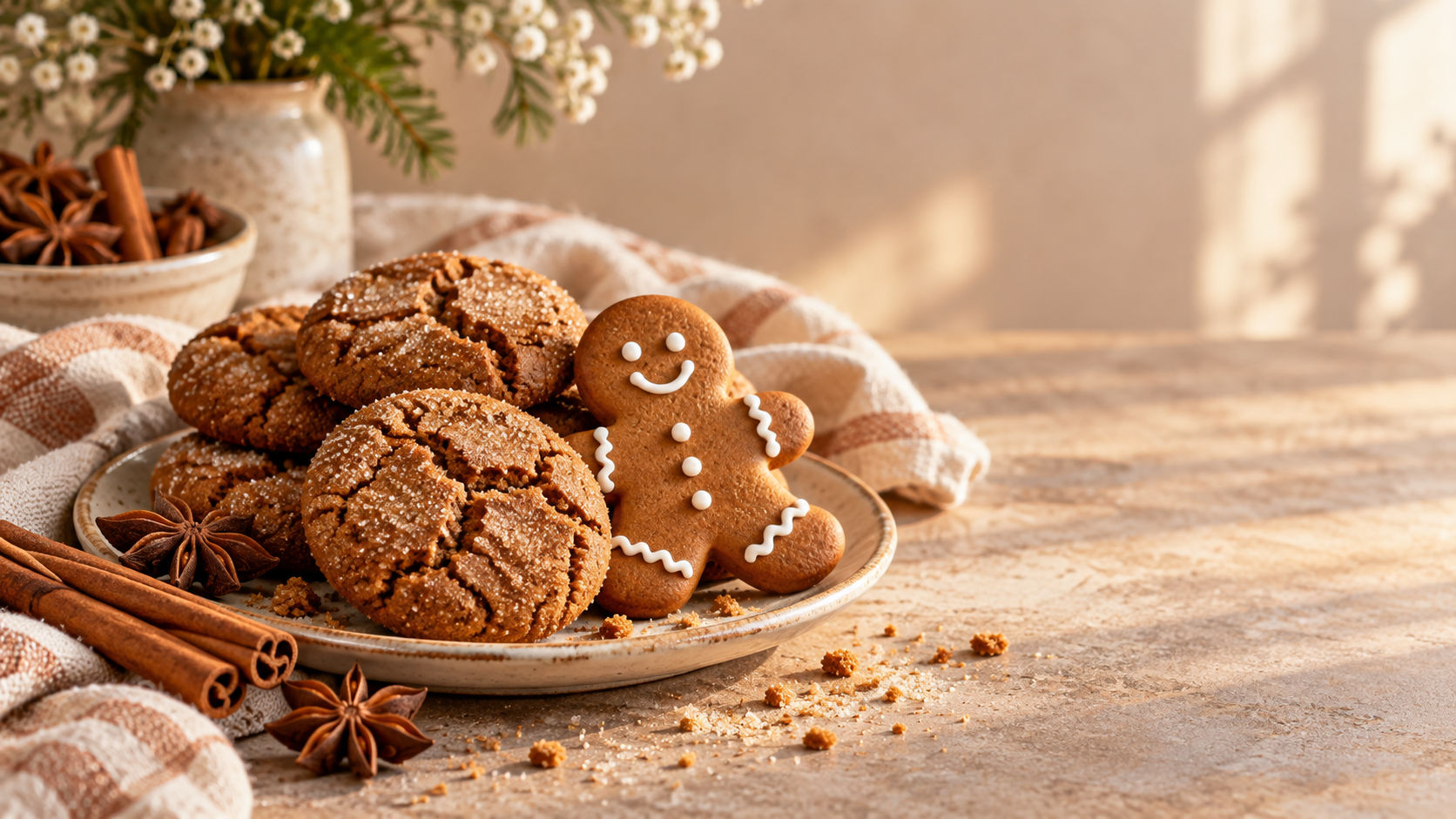 KITCHEN TESTEDAPPROVEDGINGERBREAD COOKIES
Frequently Asked Questions
A few helpful answers before you bake.
Are these cut-out cookies?
No. This softer dough is scooped into rounds and spreads as it bakes; use the Soft and Chewy recipe for rolled shapes.
Why is my dough too sticky?
The butter or dough may be warm. Complete the one-hour chill, then scoop with lightly damp hands rather than adding flour.
Why did my cookies become hard?
Too much flour, overbaking or uncovered storage can dry them out. Check at 11 minutes and remove while the centers are still soft.
Do I need the sugar coating?
No. It adds a sparkling surface and a little crunch; bake the uncoated portions for the same time and judge doneness by the edges.
Can I freeze the dough?
Yes. Freeze uncoated portions for up to 2 months. Thaw covered in the refrigerator, let them become scoopable, then coat and bake.
 Follow The Cookie Index on Pinterest
Share a little gingerbread joy
Send this recipe to someone who loves to bake.