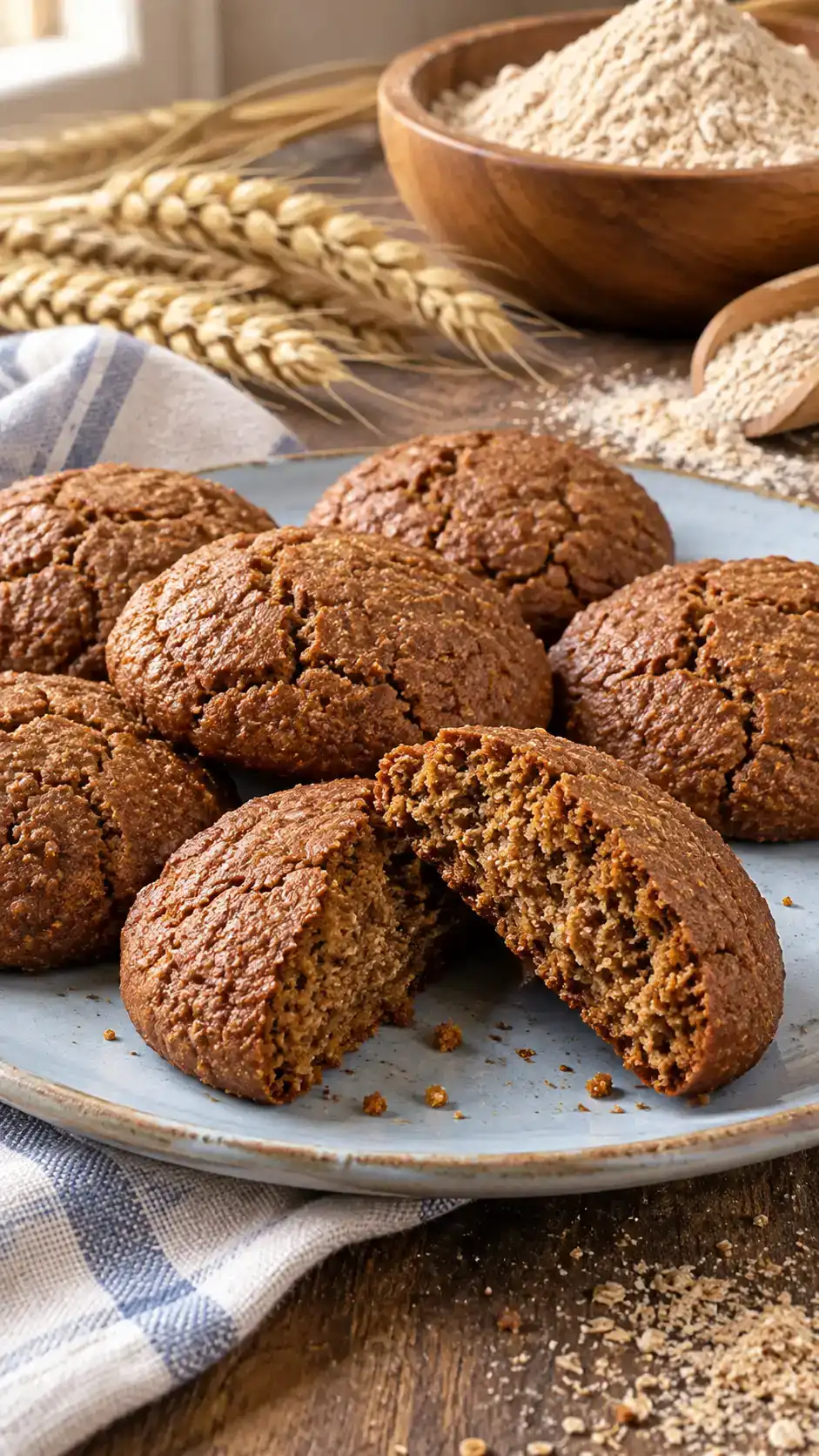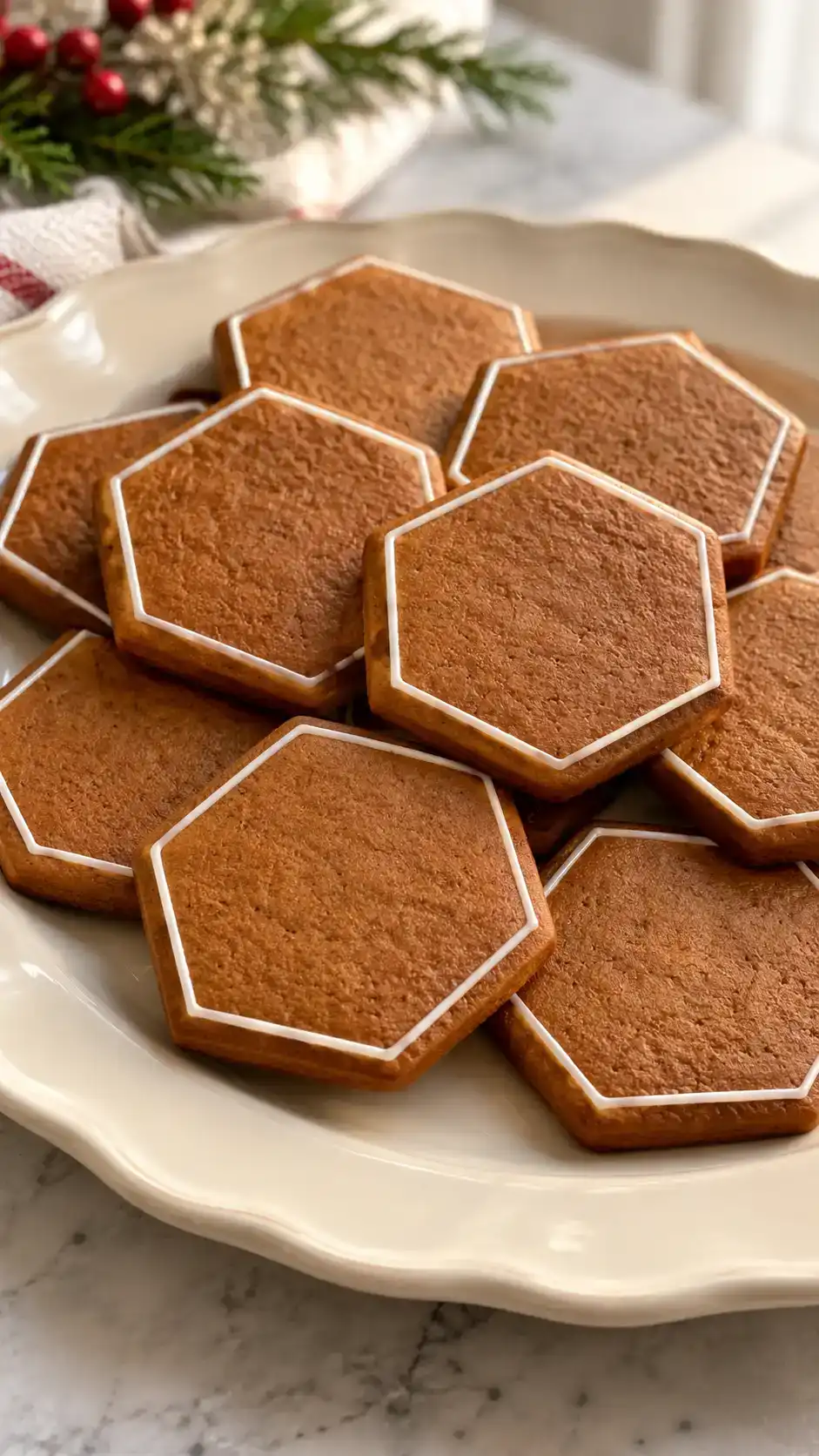
Simple gingerbread cut-outs made with melted butter, a wooden spoon and a short dough chill—no mixer needed.
Melt the butter with brown sugar and molasses, then bring the dough together with a wooden spoon. There is no creaming step and no electric mixer to clean afterward.
A short refrigerator rest makes shaping easier. Roll between parchment, choose simple cutters and check the first tray early: firm edges with a slightly soft center are the goal.

Easy Gingerbread Cookies
Per tray: 8–9 minutes · About 3 trays; bake one tray at a time
Allow 102 minutes: 25 minutes hands-on, 30 minutes chilling, about 27 minutes for three trays and 20 minutes cooling the last tray. Cooling includes the 5-minute pan rest. Butter warm-up, extra chilling and optional decorating add time.
Kitchen tools you’ll need
- Digital kitchen scale and US measuring cups/spoons
- Large mixing bowl and wooden spoon; small saucepan
- Rolling pin with 1/4-inch guides and 3-inch cookie cutters
- Two 13 × 18-inch light-colored baking sheets and parchment paper
- Wide spatula and wire cooling rack
Simple gingerbread cut-outs made with melted butter, a wooden spoon and a short dough chill — no mixer needed.
Ingredients
Scaling adjusts ingredient weights and US equivalents. Keep cookie size, thickness, oven temperature and time per tray unchanged; extra trays increase total time. For half a batch, beat the egg and weigh half.
Cookie dough
Spice blend
Instructions
Mix
- Melt gentlyWarm butter, brown sugar and molasses in a small saucepan over low heat just until butter melts. Remove from heat and cool until lukewarm; it must not be hot when the egg is added.
- Stir by handWhisk flour, soda, salt and spices in a bowl. Stir in the cooled butter mixture, then the egg, using a wooden spoon. Mix just until a cohesive dough forms; do not knead repeatedly.
Chill
- Firm two discsDivide into two flattened discs, wrap and chill at least 30 minutes, until easy to handle. Preheat to 350°F (177°C) conventional, or about 320°F (160°C) fan; line baking sheets.
Shape
- Roll between parchmentRoll one disc between parchment sheets to 1/4 inch thick. Cut simple 3-inch shapes and arrange 1 inch apart on lined pans. Keep unused dough cool. Gently reroll scraps; chill again if shapes tear during transfer.
Bake
- Watch the edgesBake one tray on the center rack for 8–9 minutes. Edges should feel set and look slightly darker; centers remain a little soft. Check earlier for smaller shapes or fan ovens. Cool pans between batches.
Cool
- Set before movingRest 5 minutes on the pan, then transfer with a spatula to a rack for about 15 minutes. Decorate only when completely cool with optional prepared icing; decorating adds time.
Chef’s Science & Pro Tips
No mixer required
Melted butter disperses readily through the dough. Cooling the mixture before adding egg prevents premature egg cooking.
Make rolling easier
Parchment keeps sticky dough off the rolling pin and reduces added flour. If it clings when peeled, chill it until it releases.
Simple finish
Choose plain hearts or people for an easy batch. More intricate cutters take longer and thin points can overbake before thick centers.
Storage & Make-Ahead
| Method | How long | What to do |
|---|---|---|
| Room temperature | Up to 5 days | Cool completely and seal airtight in a cool, dry place. Keep soft cookies separate from crisp cookies. Let any icing dry before layering. |
| Refrigeration | Raw dough: up to 48 hours | Wrap tightly. Let dough soften just enough to roll. Plain baked cookies do not need refrigeration; follow storage instructions for any added icing. |
| Freeze raw dough | Up to 2 months at 0°F (−18°C) | Freeze wrapped flat dough discs airtight. Thaw overnight in the refrigerator, then follow the shaping and baking instructions. |
| Freeze baked cookies | Up to 2 months at 0°F (−18°C) | Freeze fully cooled, preferably undecorated cookies in an airtight container, separating layers with parchment. Thaw covered at room temperature. |
| Refresh | Just before serving | For a softer bite, microwave one plain cookie for 5 seconds and check; serve promptly. Do not heat decorated cookies. This will not reverse severe drying or overbaking. |
Notes
- Use regular unsulphured molasses, not blackstrap. Flour cup weights vary; spoon and level without packing, or use the stated grams. Spice weights are approximate; spoon measures are more practical for small amounts. Contains wheat, milk and egg. Optional icing and coating are additional.
Nutrition
Approximate nutrition per cookie, calculated from generic ingredient values for 26 equal-size cookies. Excludes optional sugar coating and icing; spices and vanilla contribute small additional amounts. Brands and actual yield change these estimates.
 KITCHEN TESTEDAPPROVEDGINGERBREAD COOKIES
Frequently Asked Questions
A few helpful answers before you bake.
Do I need an electric mixer?
No. A small saucepan, bowl and wooden spoon are enough; the butter is melted instead of creamed.
Is this a no-chill recipe?
No. It needs at least 30 minutes in the refrigerator. This is a simpler no-mixer method, not a no-chill formula.
Why should the butter mixture cool?
Hot butter and syrup can partially cook the egg. Let the mixture become lukewarm before combining the dough.
Should I measure flour with cups or a scale?
The formula uses 340 g flour, approximately 2 3/4 cups. Cup weights vary with packing; weighing is the most consistent approach.
Can I use blackstrap molasses?
Use regular unsulphured molasses here. Blackstrap is considerably stronger and more bitter, so it is not an equivalent swap.
 Follow The Cookie Index on Pinterest
Share a little gingerbread joy
Send this recipe to someone who loves to bake.