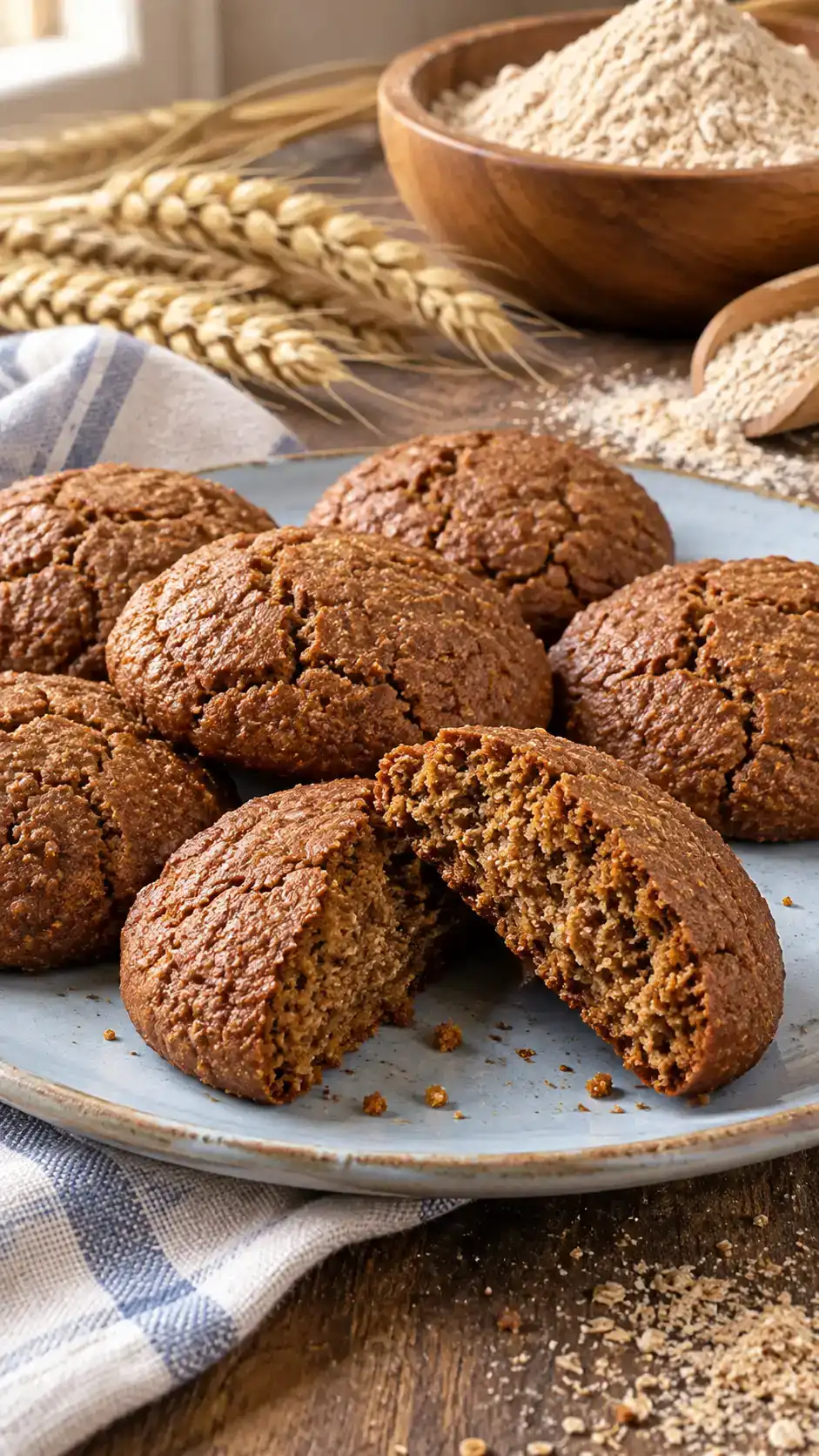
Half-inch-thick gingerbread rounds with sturdy edges and substantial tender molasses centers.
Thin and thick areas on the same cookie bake unevenly.
The half-inch thickness gives a substantial tender center rather than a thin crisp cut-out. Even rolling is essential for consistent doneness. Extra chilling for softened shapes adds time. These thick rounds are intended for eating rather than building gingerbread houses.
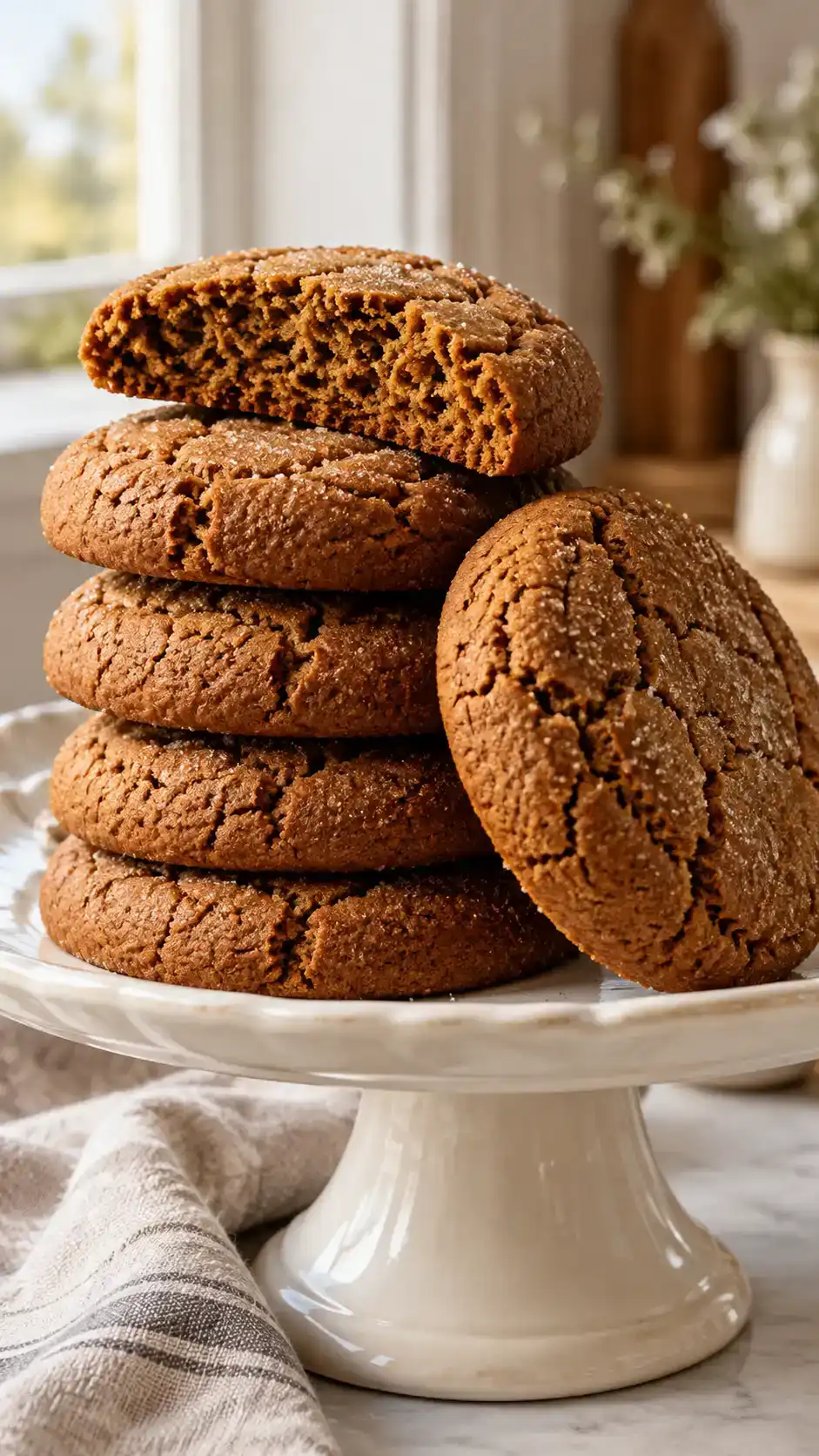
Thick Gingerbread Cookies
Per tray: 12–15 minutes · 3 trays of 8 three-inch rounds
Allow 165 minutes: 35 hands-on, 60 chilling, 45 for all baking trays, 25 cooling. Cooling includes the pan rest. Optional decoration, ingredient warm-up and extra trays add time.
Kitchen tools you’ll need
- US measuring cups/spoons and digital kitchen scale
- Small saucepan and a large mixing bowl
- Rolling pin with 1/2-inch guides
- 3-inch round cutter
- Two light-colored aluminum baking sheets, about 13 × 18 inches (33 × 46 cm), and parchment
- Wide spatula, wire cooling rack and oven thermometer
Half-inch-thick gingerbread rounds with sturdy edges and substantial tender molasses centers.
Ingredients
Scale ingredients and US equivalents, including eggs. Keep cookie size, thickness, oven temperature and baking time per tray unchanged. More trays add time; weigh beaten egg for fractional batches.
Cookie dough
Spice blend
Instructions
A · Prepare & mix
- Melt & seasonGently melt butter over low heat. Remove from the heat and stir in sugar, molasses, salt and spices until evenly combined. Let cool until lukewarm before beating in the egg.
- CombineWhisk flour with baking powder and baking soda, then mix into the wet ingredients until no dry flour remains. Dough will be sticky; do not add more flour.
B · Chill
- Firm the doughDivide into two flattened rectangles, wrap tightly and refrigerate at least 60 minutes, until cold and firm enough to roll. Chilling firms the butter and lets the flour hydrate.
C · Roll & cut
- ShapeHeat to 350°F (175°C) conventional or 325°F (165°C) fan. Roll cold dough an even 1/2 inch thick. Cut 3-inch rounds and space 2 inches apart. Gather scraps gently, keeping waiting dough cold.
D · Bake
- Check donenessBake 12–15 minutes until the rims are set and the top looks dry. The thick middle should no longer look wet but stays yielding. Check the first tray at 12 minutes and avoid judging by hardness while hot.
E · Cool & finish
- Cool before icingRest 7 minutes on the pan, then cool about 18 minutes on a rack. Serve plain to show the substantial thickness.
Chef’s Science & Pro Tips
Use half-inch guides
Thin and thick areas on the same cookie bake unevenly.
Check the middle surface
It should lose its wet sheen while remaining soft; a hard hot center is overbaked.
Give extra pan support
Thick warm rounds need the seven-minute pan rest before lifting.
Storage & Make-Ahead
| Method | How long | What to do |
|---|---|---|
| Room temperature | Up to 5 days | Store fully cooled cookies airtight in a cool, dry place. Let icing dry, then separate layers with parchment; follow any icing storage instructions. |
| Refrigeration | Dough: up to 48 hours | Keep dough tightly wrapped. Let it soften just enough to roll while remaining cool. Plain baked cookies do not need refrigeration. |
| Freeze raw dough | Up to 2 months at 0°F (−18°C) | Wrap flattened dough portions tightly, then bag. Thaw overnight in the refrigerator and roll while cool. |
| Freeze baked cookies | Up to 2 months at 0°F (−18°C) | For best appearance, freeze undecorated, cooled cookies airtight. Thaw covered at room temperature before icing. |
| Refresh | Before decorating | For crisper edges, warm plain cookies at 300°F (150°C) conventional for 3–5 minutes. Cool on a rack. Do not reheat iced cookies. |
Notes
- The half-inch thickness gives a substantial tender center rather than a thin crisp cut-out. Even rolling is essential for consistent doneness. Extra chilling for softened shapes adds time. These thick rounds are intended for eating rather than building gingerbread houses.
Nutrition
Approximate per-serving values calculated from generic ingredient weights and stated yield, including listed fillings, glaze and coating. Excludes optional decoration and bench flour. Brands, unused coating, decoration amounts and actual yield change these estimates.
 RECIPE REVIEWEDGINGERBREADGINGERBREAD COOKIES
Frequently Asked Questions
A few helpful answers before you bake.
How thick is thick?
Roll this batch to 1/2 inch, twice a standard 1/4-inch cut-out.
Why are the middles gummy?
Uneven thick spots or removing cookies before the middle loses its wet sheen can leave underbaked dough.
Are these suitable for a house?
Use a construction gingerbread recipe instead; these rounds have tender eating-sized centers.
 Follow The Cookie Index on Pinterest
Share a little gingerbread joy
Send this recipe to someone who loves to bake.