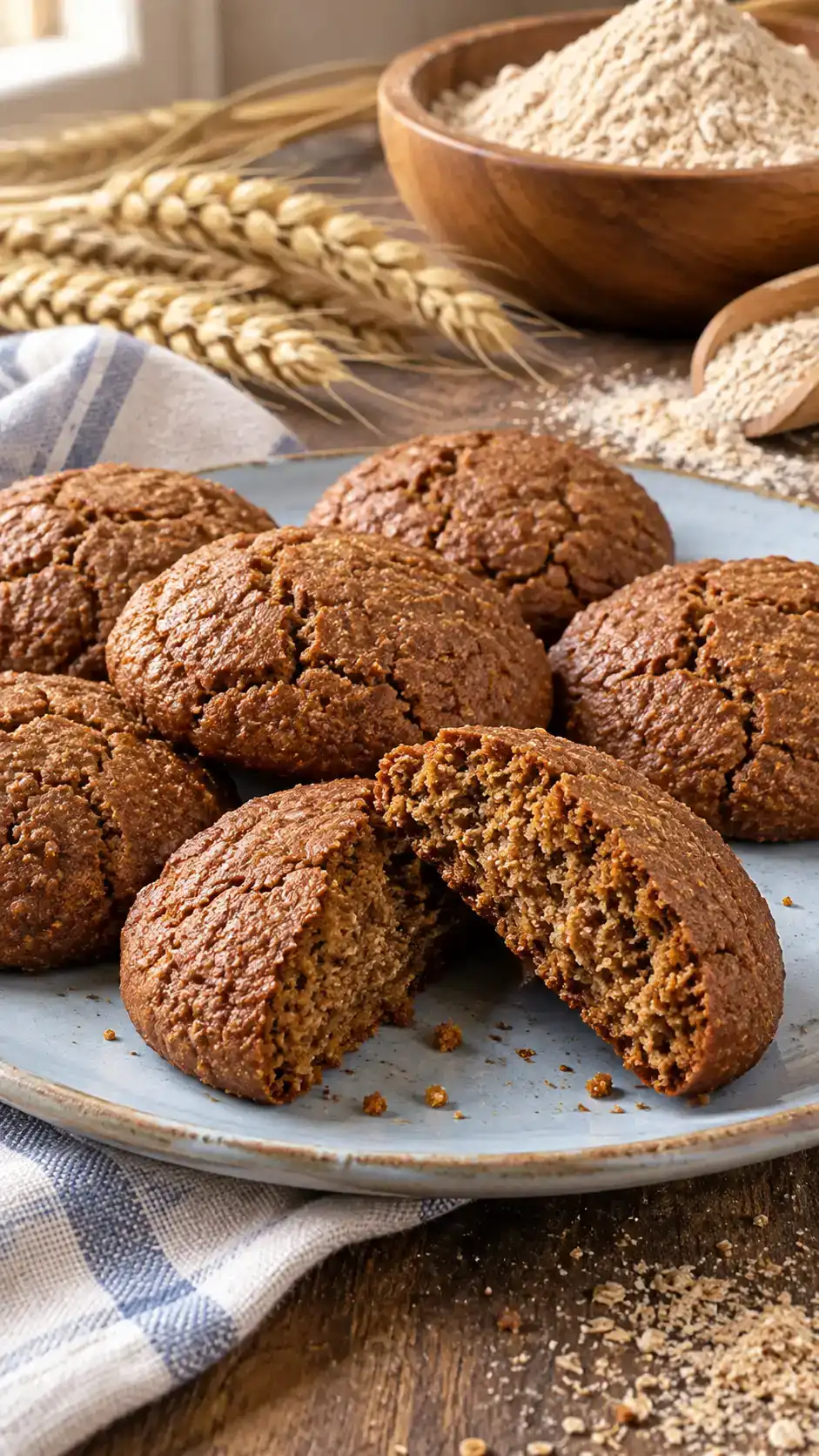
Scoop-and-bake gingerbread rounds with no mandatory dough chilling, ideal for baking without rolling or cutters.
This is a drop-cookie method: mix, scoop and bake, without rolling out the dough or cutting shapes.
Start with butter that dents easily but stays solid. The dough should be soft enough to scoop and cool enough to hold its rounded portion.

No-Chill Gingerbread Cookies
Per tray: 9–11 minutes · about 3 trays, 12 cookies per tray
Allow about 70 minutes: 20 minutes hands-on, 30 minutes for three trays and 20 minutes to cool the last tray. Cooling includes a 10-minute pan rest. No mandatory chilling; time to soften butter and optional extra chilling are additional.
Kitchen tools you’ll need
- Digital scale, 1 g increments (0.1 g for small spice weights)
- Large mixing bowl and electric mixer
- Medium cookie scoop, about 2 tablespoons; aim for 32 g per portion
- Two light-colored aluminum baking sheets, about 13 × 18 inches (33 × 46 cm)
- Parchment paper and a wide spatula
- Wire cooling rack and an oven thermometer
Scoop-and-bake gingerbread rounds with no mandatory dough chilling, ideal for baking without rolling or cutters.
Ingredients
Scale ingredients and US equivalents, including eggs. Keep cookie size, thickness, oven temperature and baking time per tray unchanged. More trays add time; weigh beaten egg for fractional batches.
Cookie dough
Spice blend
Instructions
A · Prepare & mix
- PreparePreheat to 350°F (175°C) conventional, or 320°F (160°C) fan. Line pans with parchment. Butter should dent under light pressure without looking oily.
- CreamBeat butter and the 1 cup sugar for 2–3 minutes until lighter and fluffy. Scrape the bowl. Mix in molasses, leavener, salt and spices; add eggs one at a time.
B · Manage dough temperature
- Finish the doughMix flour in on low just until the dough is evenly combined. This dough goes directly to scooping when the butter is properly softened. If very warm or greasy, cool the dough briefly; do not add flour to force it dry.
C · Portion
- Scoop & coatScoop about 32 g (roughly 2 tablespoons) directly onto lined pans, with 2 1/2-inch gaps. Leave the rounds plain; no rolling or sugar coating is required. Expect about 12 per 13 × 18-inch tray.
D · Bake
- Watch the edgesBake one tray on the center rack for 9–11 minutes; check at 9 minutes, especially with fan. Edges should be set, tops crackled and centers soft but no longer wet. Cool pans before refilling.
E · Cool & finish
- Set, then transferRest 10 minutes on the pan, then use a spatula to transfer to a rack. Allow another 10 minutes or until completely cool before storing. Repeat for remaining trays.
Chef’s Science & Pro Tips
Baker’s science
Molasses supplies moisture and acidity; baking soda supports rise and browning. Use the stated soda dose, and mix only until flour disappears to keep the centers tender.
Temperature control
Warm butter and hot baking sheets encourage excess spread. If the first tray spreads too far, cool the next pan and chill the remaining dough 15–20 minutes instead of adding flour.
Flavor & texture
Enjoy once cool, or store airtight overnight for a more settled spice flavor. Keep soft cookies separate from crisp varieties so their textures stay distinct.
Storage & Make-Ahead
| Method | How long | What to do |
|---|---|---|
| Room temperature | Up to 5 days | Cool fully; seal in an airtight container in a cool, dry place. Separate layers with parchment. |
| Refrigeration | Dough: up to 48 hours | Wrap dough tightly. Cold dough spreads less; let it become scoopable before portioning. Baked cookies keep better at room temperature. |
| Freeze raw dough | Up to 2 months at 0°F (−18°C) | Freeze uncoated portions on a tray, then bag airtight. Thaw covered in the refrigerator; roll in sugar before baking. |
| Freeze baked cookies | Up to 2 months at 0°F (−18°C) | Freeze completely cooled cookies in an airtight container with parchment between layers. Thaw covered at room temperature. |
| Refresh | As needed | Warm an undecorated cookie for 5–8 seconds in the microwave and check. Warming helps temporarily; it cannot restore a dried-out batch completely. |
Notes
- Use regular unsulphured molasses, softened butter that is not oily, and cool pans. There is no required chill when the dough is scoopable. Contains wheat, milk and eggs.
Nutrition
Approximate values per serving calculated from generic ingredient weights and the stated yield; excludes optional decoration and unused bench flour. Brands, sizing and actual yield change these estimates.
 RECIPE REVIEWEDGINGERBREADGINGERBREAD COOKIES
Frequently Asked Questions
A few helpful answers before you bake.
Do I need to refrigerate the dough?
Not routinely. Properly softened butter makes a scoopable dough; briefly cool it only if it becomes greasy.
Can I cut shapes from this dough?
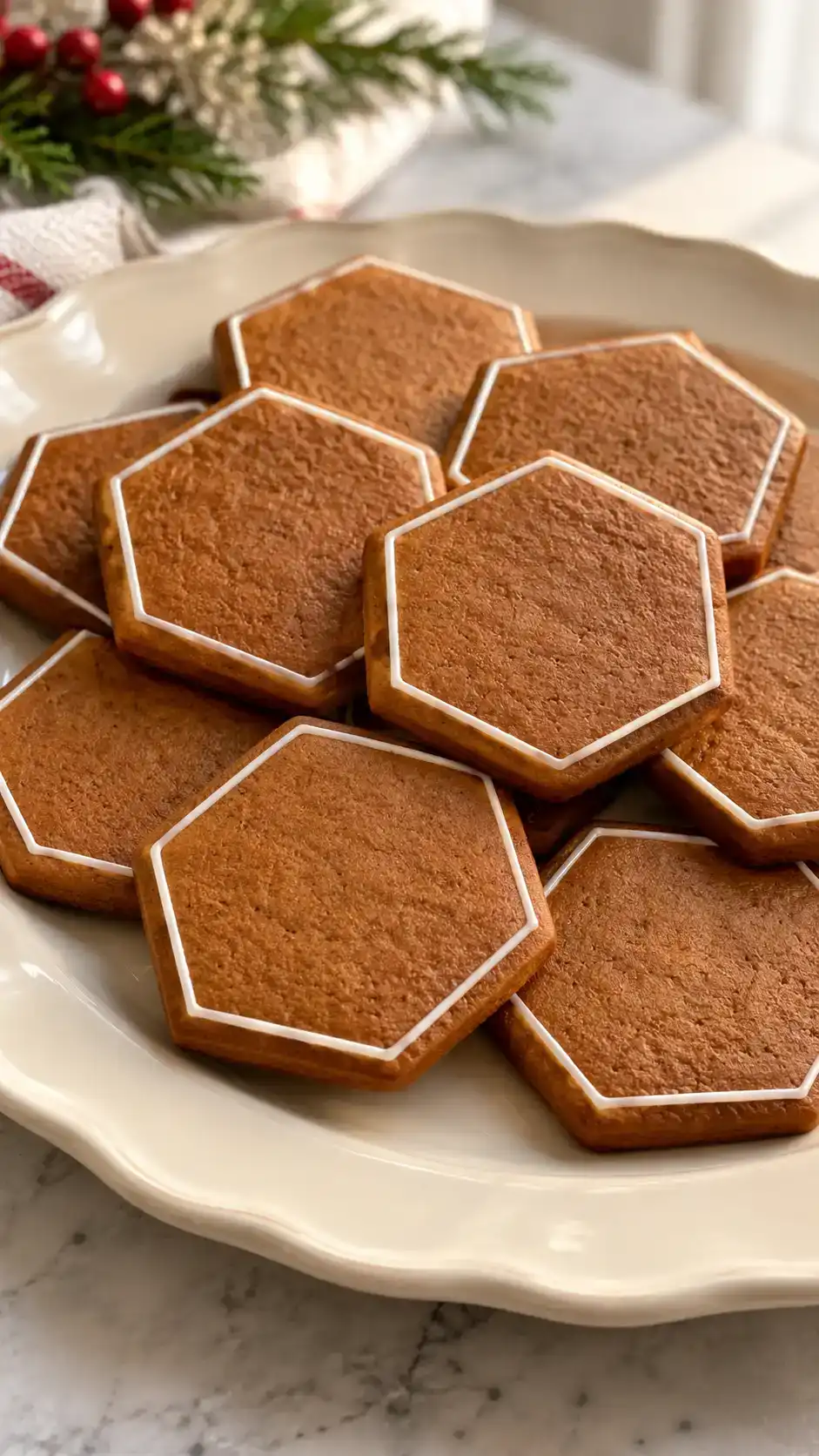
No. This is a drop-cookie formula that spreads while baking. Use a rolled recipe for cookie cutters.
What does softened butter look like?
It dents under light pressure but holds its shape. It should not look melted or oily.
Can I scoop onto a hot pan?
Let pans cool first. Hot metal melts the butter before the cookie structure sets and encourages excess spreading.
 Follow The Cookie Index on Pinterest
Share a little gingerbread joy
Send this recipe to someone who loves to bake.