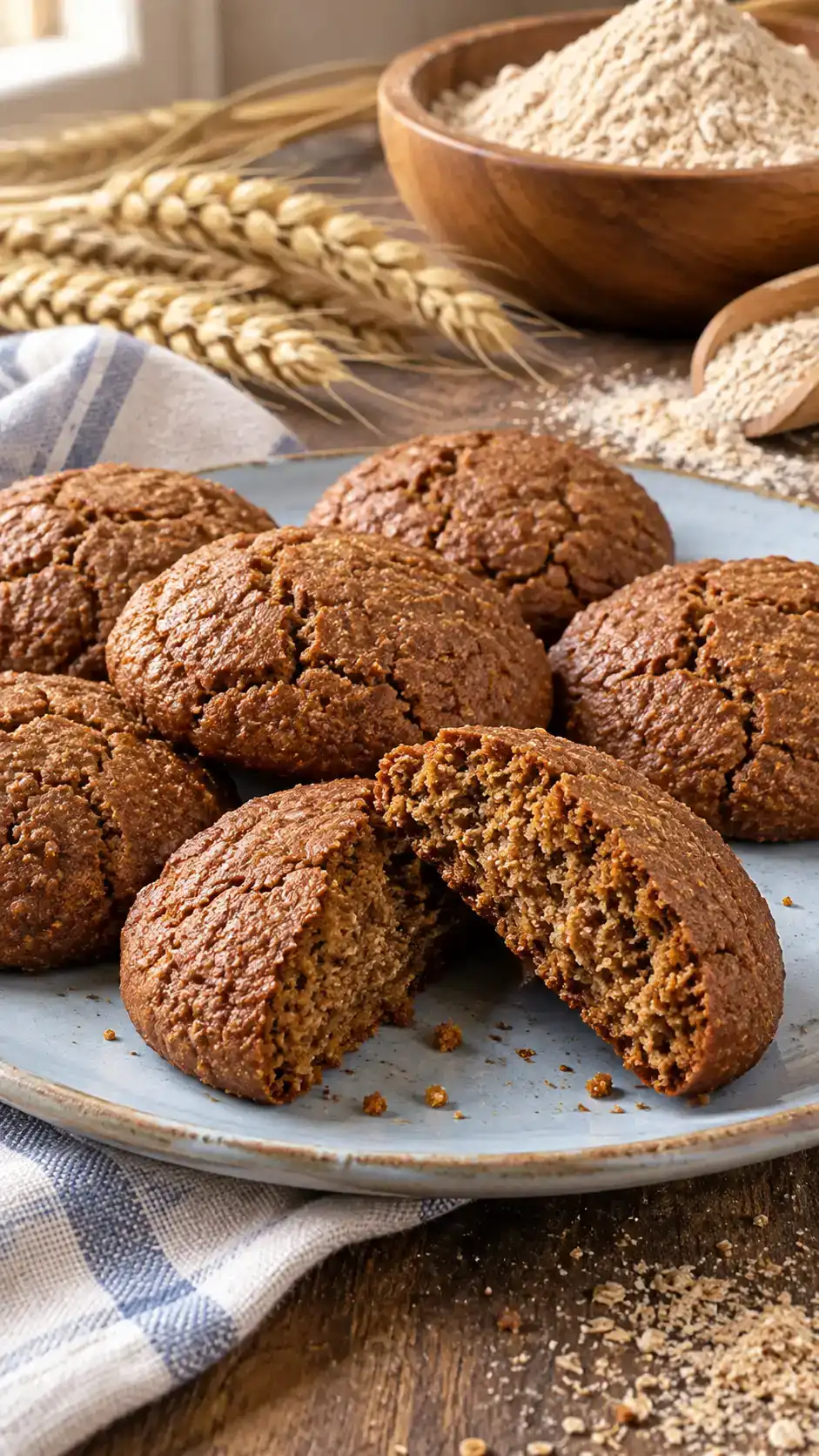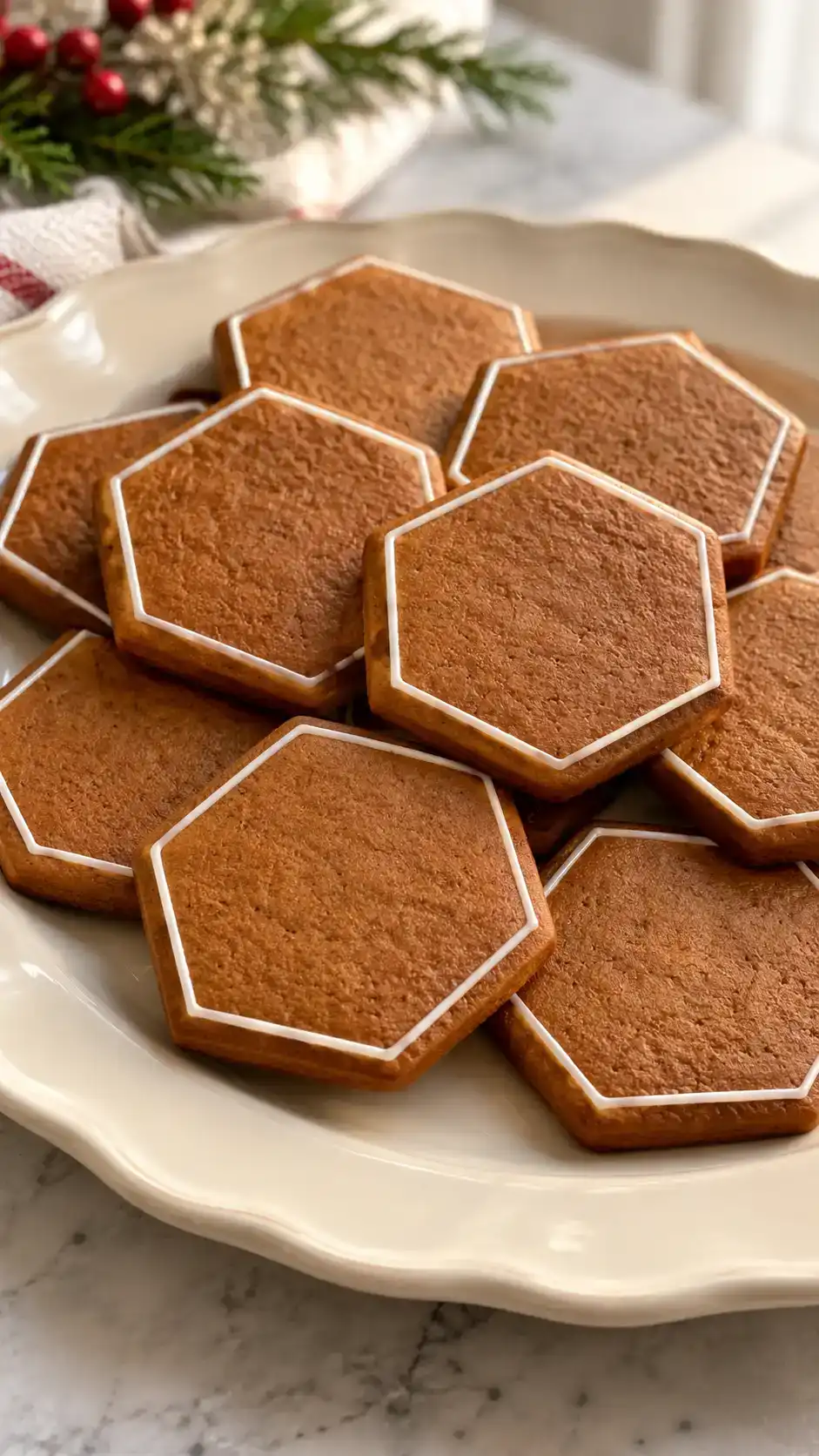
Classic molasses gingerbread cookies mixed by hand with melted butter, a whisk and a sturdy spoon, without an electric mixer.
A hot molasses mixture can cook the egg; let it cool before whisking.
Melted butter makes hand mixing practical; softened-butter recipes usually depend more on creaming. Use a sturdy spoon and mix only until flour disappears. The dough still requires 1 hour of chilling before rolling; no mixer does not mean no chill.

Gingerbread Cookies Without a Mixer
Per tray: 8–12 minutes · about 3 trays of similar-size shapes
Allow about 2 hours 25 minutes: 35 minutes hands-on, at least 60 minutes chilling, about 30 minutes for three trays and 20 minutes cooling. Cooling includes the pan rest. Decoration, longer chilling and extra trays add time.
Kitchen tools you’ll need
- Small saucepan
- Large mixing bowl, hand whisk and sturdy spoon
- Rolling pin with 1/4-inch guides
- 3-inch cutters
- Two 13 × 18-inch baking sheets and parchment
- Cooling rack and US measures/scale
Classic molasses gingerbread cookies mixed by hand with melted butter, a whisk and a sturdy spoon, without an electric mixer.
Ingredients
Scale ingredients and US equivalents, including eggs. Keep cookie size, thickness, oven temperature and baking time per tray unchanged. More trays add time; weigh beaten egg for fractional batches.
Cookie dough
Spice blend
Instructions
A · Prepare & mix
- Melt & seasonMelt butter gently in a small saucepan. Pour into a large mixing bowl and stir in sugar, molasses, salt and spices with a hand whisk. Let become lukewarm before whisking in the egg until evenly blended.
- CombineWhisk flour, baking powder and soda in a separate bowl. Add gradually to the wet mixture and stir with a sturdy spoon or silicone spatula. Press remaining dry crumbs into the dough gently. No electric mixer or creaming step is needed.
B · Chill
- Firm the doughDivide into two flattened rectangles, wrap tightly and refrigerate at least 60 minutes, until cold and firm enough to roll. Chilling firms the butter and lets the flour hydrate.
C · Roll & cut
- ShapePreheat to 350°F (175°C) conventional, or 320°F (160°C) fan. Lightly flour a clean worktop and rolling pin. Roll one portion ¼ inch (6 mm) thick; cut 3 inches (7.5 cm) shapes. Gather scraps gently; keep the other portion cold.
D · Bake
- Check donenessPlace on parchment-lined pans about 1 inch (2.5 cm) apart. Bake one tray at a time for 8–12 minutes. Check at 8 minutes, especially with fan: edges should darken slightly and surfaces look set. Smaller shapes finish sooner.
E · Cool & finish
- Cool before icingRest on the pan 5 minutes until safe to lift, then transfer to a rack for about 15 minutes or until fully cool. Optional prepared cookie icing may be used according to its packaging; it is additional to this dough formula.
Chef’s Science & Pro Tips
Use lukewarm butter
A hot molasses mixture can cook the egg; let it cool before whisking.
Switch from whisk to spoon
The whisk suits wet ingredients; a sturdy spoon handles the thick dough without bending.
Avoid extra kneading
Hand mixing needs only enough work to combine the flour, preserving a tender cookie.
Storage & Make-Ahead
| Method | How long | What to do |
|---|---|---|
| Room temperature | Up to 5 days | Store fully cooled cookies airtight in a cool, dry place. Let icing dry, then separate layers with parchment; follow any icing storage instructions. |
| Refrigeration | Dough: up to 48 hours | Keep dough tightly wrapped. Let it soften just enough to roll while remaining cool. Plain baked cookies do not need refrigeration. |
| Freeze raw dough | Up to 2 months at 0°F (−18°C) | Wrap flattened dough portions tightly, then bag. Thaw overnight in the refrigerator and roll while cool. |
| Freeze baked cookies | Up to 2 months at 0°F (−18°C) | For best appearance, freeze undecorated, cooled cookies airtight. Thaw covered at room temperature before icing. |
| Refresh | Before decorating | For crisper edges, warm plain cookies at 300°F (150°C) conventional for 3–5 minutes. Cool on a rack. Do not reheat iced cookies. |
Notes
- Melted butter makes hand mixing practical; softened-butter recipes usually depend more on creaming. Use a sturdy spoon and mix only until flour disappears. The dough still requires 1 hour of chilling before rolling; no mixer does not mean no chill.
Nutrition
Approximate per-serving values from generic ingredient weights and the stated yield. Includes listed toppings and fillings; excludes optional decoration and unused bench flour. Brand composition, leftover coating, cutter size and actual yield change these estimates.
 RECIPE REVIEWEDGINGERBREADGINGERBREAD COOKIES
Frequently Asked Questions
A few helpful answers before you bake.
Do I need a hand mixer?
No. A whisk mixes the liquid ingredients and a sturdy spoon finishes the dough.
Can I skip melting the butter?
Melting is what makes this hand-mixed method practical. Use the method as written.
Does no mixer mean no chilling?
No. The melted-butter dough needs at least 1 hour of chilling to roll cleanly.
 Follow The Cookie Index on Pinterest
Share a little gingerbread joy
Send this recipe to someone who loves to bake.