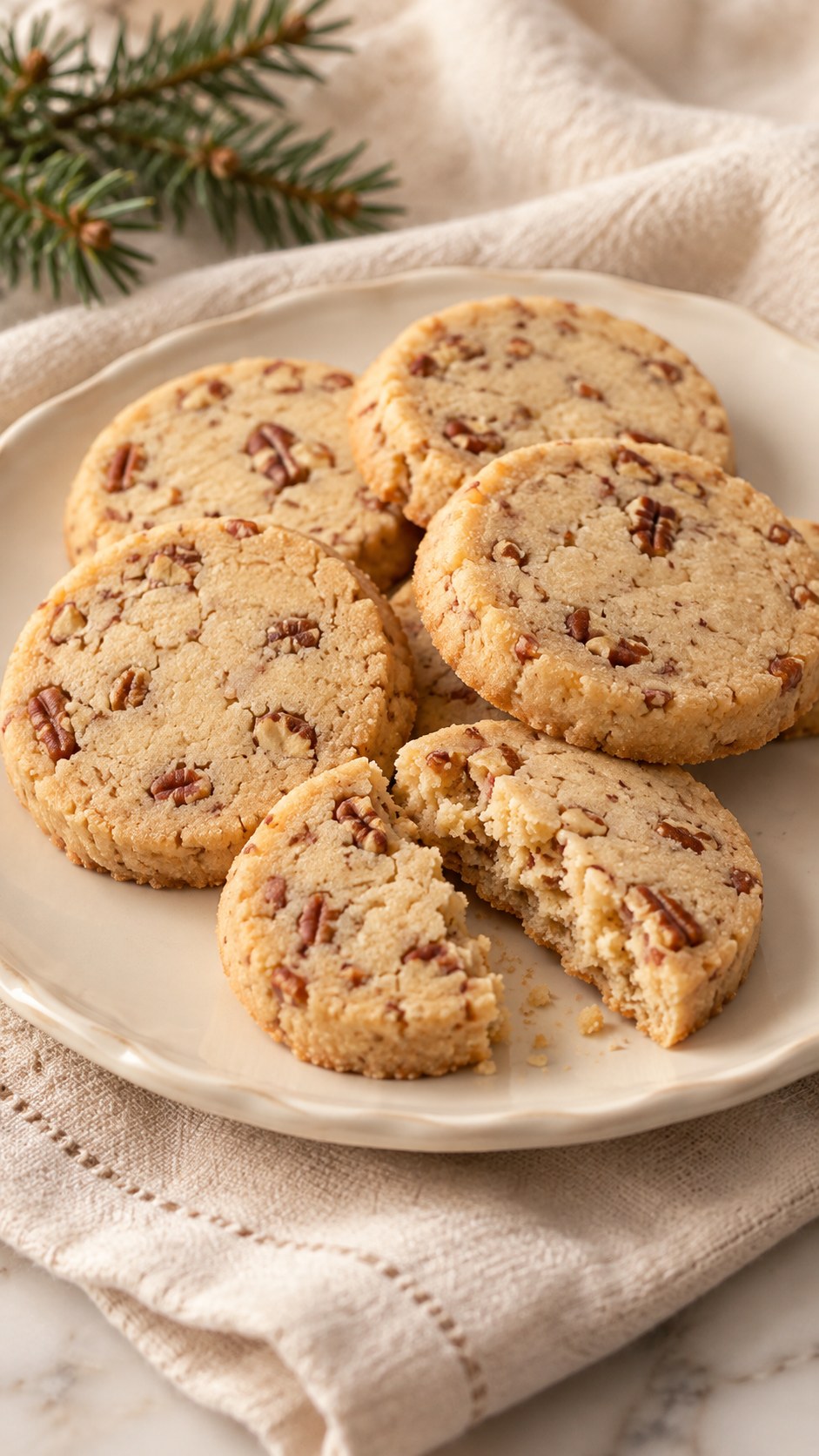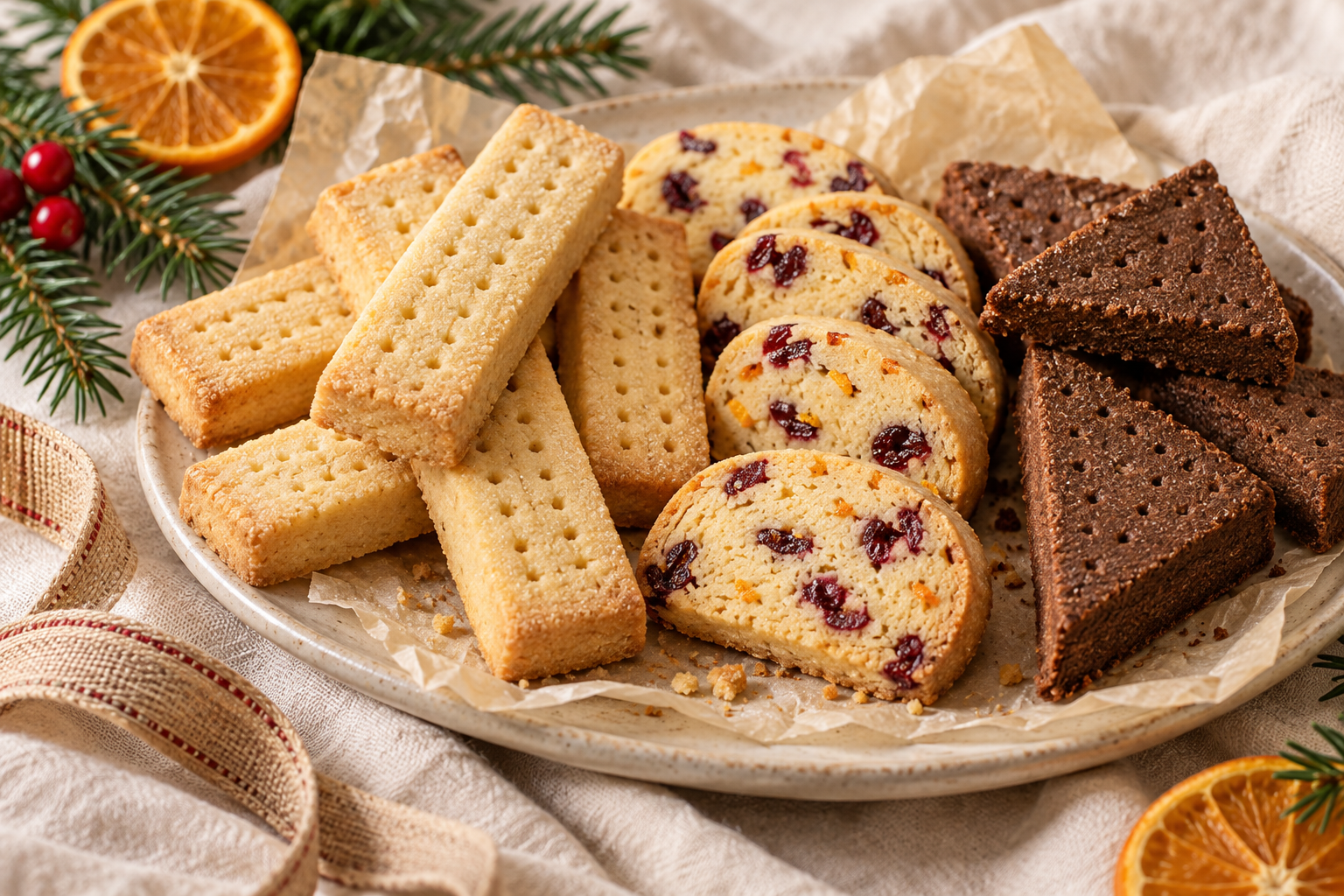
Add peanut butter only after whipping the dairy butter; heavy nut paste at the start limits aeration.
Whipped cornstarch shortbread with a modest peanut-butter addition and a half-chocolate dip.
As an Amazon Associate I earn from qualifying purchases.

Chocolate-Dipped Whipped Peanut Butter Shortbread Recipe
Follow the tray sizes, portions and baking intervals in the instructions below.
Total time includes hands-on preparation, required chilling or resting, whole-batch cooking, cooling and finishing.
Kitchen tools you’ll need
- mixing bowl
- mixer
- kitchen scale
- two 13 x 18-inch half sheets
- parchment
- fork
- wide spatula
- cooling rack
Ingredients
US measures are approximate. Gram weights help keep portions consistent; spice weights vary with density.
Instructions
Whip and mix
- Whip and mix: Beat butter and sugar 4 minutes until pale and airy, scraping twice. Beat in peanut butter briefly until smooth. Sift flour, cornstarch and salt and mix on low just until combined; stop before the foam collapses.
Shape and chill
- Shape and chill: Divide all dough into 24 portions about 15 g each. Roll lightly and press with a fork into 1 3/4-inch rounds about 3/8 inch thick without flattening out all the air. Chill 30 minutes.
Bake the whole batch
- Bake the whole batch: Heat oven to 300°F (150°C) conventional or 275°F (135°C) fan. Place 12 rounds per parchment-lined 13 x 18-inch half sheet, at least 1 inch apart. Bake one sheet at a time for 18–22 minutes until surfaces set and bases are faint gold, keeping waiting tray chilled. Whole-batch oven time is up to 44 minutes.
Cool and dip
- Cool and dip: Rest 10 minutes on trays and 20 minutes on a rack. Melt chocolate in short 20-second microwave bursts, stirring often. Dip half of each cold cookie and rest on parchment 30 minutes to set. Cooling/setting totals 60 minutes including tray rest.
Timing and scaling
- Timing and scaling: 30 min hands-on + 30 min required chill/rest + 44 min whole-batch oven baking + 60 min cooling/setting = 164 min. Cooling includes tray/pan rests and runs from the final tray; earlier-tray cooling may overlap later baking. Ingredient warm-up and frozen-dough thawing are extra; preheat during shaping/chilling. Scale ingredients and US equivalents, not oven temperature, piece sizes or per-tray bake time; extra trays extend the whole-batch time.
Chef’s Science & Pro Tips
Ingredient science
Whipping supplies air and cornstarch reduces gluten; the modest peanut-butter fraction differs from dense nut-butter shortbread.
Technique & texture
Add peanut butter only after whipping the dairy butter; heavy nut paste at the start limits aeration.
Finishing & serving
Let the half-dip set before handling; these airy cookies are more fragile than compact peanut-butter rounds.
Storage and make-ahead
| Method | How long | What to do |
|---|---|---|
| Room temperature | 5 days | Up to 5 days. Seal fully cooled cookies airtight in a cool dry room. Separate layers with parchment; let the coating set before packing. |
| Refrigeration | up to 7 days | Unnecessary; up to 7 days if needed. Baked refrigeration is unnecessary for this formula; use only if the room is warm. Seal airtight to prevent condensation and odors. |
| Raw freezing | 1 month | Up to 1 month. Freeze the unfilled dough tightly wrapped. Thaw overnight in the refrigerator, then shape and complete the stated chill. Thawing time is additional. |
| Baked freezing | 2 months | Up to 2 months. Freeze uncoated baked cookies airtight with parchment between layers. Thaw sealed at room temperature for 1–2 hours. Apply the finish after thawing. |
| Restoring | As described | Serve after thawing. Do not oven-refresh the assembled or coated cookies. Serve once thawed; reseal unused portions. |
Notes
- Scale ingredients, including US measures, without changing cookie size or oven temperature. Extra trays increase whole-batch time.
Nutrition
Approximate values per portion from the listed ingredient weights divided into 24 equal portions. Includes required fillings and finishes. Brands, unused coatings and actual portion size affect the estimate.
Frequently Asked Questions
How is this different from dense peanut shortbread?
Whipping supplies air and cornstarch reduces gluten; the modest peanut-butter fraction differs from dense nut-butter shortbread.
When should I add peanut butter?
Add peanut butter only after whipping the dairy butter; heavy nut paste at the start limits aeration.
Why do these break more easily?
Let the half-dip set before handling; these airy cookies are more fragile than compact peanut-butter rounds.